Complex motivations of women gun owners revealed in new book

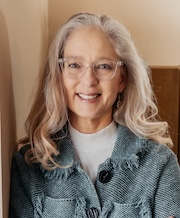
LAWRENCE — Margaret Kelley recalls attending numerous conferences in which guns were the main topic of debate. Gun violence. Gun legislation. Gun ownership. Yet they primarily focused on how men view this topic.
“Women’s experiences with guns are so different and so ignored,” said Kelley, professor of American studies at the University of Kansas.
Her new book titled “A Gun of Her Own: The Everyday Lives of Women Who Shoot” addresses that omission. The book explores the growing phenomenon of women gun owners in middle America. It challenges conventional narratives of gun culture by showing that for many women, these weapons are not merely tools for protection but powerful symbols of agency and autonomy.
The new book is published by Routledge.
“It’s not a pro-gun book or an anti-gun book. It’s a how-else-can-we-talk-about-guns book in a way that we can draw more people into the conversation,” she said.
Kelley said one of the most surprising things she learned while spending years researching the subject was how women were believed to merely be copies of men gun owners. The professor, who can be seen in the book’s cover photo taking target practice, said she wanted this project to influence the national conversation through what she feels is the key distinction between how the sexes approach owning firearms.
“I found women have a ‘care mindset’ that allows us to think about your average everyday gun owner in a way that we can have empathy for them and not anger and divisiveness,” she said.
“I don’t just mean by ‘caring’ that women have kids and understand relationships with people better – which are the more stereotypical ideas about women’s nature. But I do mean that even with a gun, you can operate with a sense of care. And for the women in my study, one of the things that means is they’re trying to not ever use their gun.”
In one of the chapters, Kelley includes a quote from a KU student noting that with research like this, “you get to become who you are studying.”
Did the professor become what she is studying?

“I think I did. I entered a world that I didn’t know anything about, and it now has become very important to me,” said Kelley, who said she is “a decent shot.”
“As a sociologist and as a feminist methodologist, you want to create ways for new voices to be heard. That method allowed me to recognize my own subjectivity to the people I’m talking to. So I have this relationship now to these women gun owners. That’s what it takes to become what you’re studying: not necessarily carrying a gun or going to D.C. to advocate for Second Amendment rights or anything like that, but to have that understanding and empathy.”
Now in her 11th year at KU, Kelley has researched a number of gun-related topics, including “‘I Know It When I See It’: Public Opinion on Removing Guns from Compromised Owners,” “Cognitive and Apathetic Racism in Patterns of Gun Ownership and Gun Control Attitudes,” “How Do Veterans View Gun Policies? Evidence from the Guns in American Life Survey” and “Who Might Buy a Gun? Results from the Guns in American Life Survey.” “A Gun of Her Own” is her first book.
Her preface asks, “Does America have a gun problem?” Now that she has spent years examining this question, she acknowledges her answer has evolved from when she first started.
“I think the underlying issues are the bigger problems. Absolutely we want to solve problems of gun violence. But the things that are driving gun violence are not just the guns. There are underlying economic inequalities, racial inequalities, segregation and cities themselves,” she said.
Kelley is careful to distinguish gun ownership from gun violence. She said most gun owners are not violent, and most gun violence occurs within specific social networks rather than across the general population.
“If we treat all gun owners as though they pose the same risk,” she said, “we lose the chance to understand where harm is actually happening and how to reduce it.”
Kelley said this book represents an effort to transform the language around that problem.
“That won’t change until we can have conversations with respect and understanding and sympathy and empathy for people with different positions,” Kelley said. “The problem we have is we don’t trust each other. We don’t trust our government. And we can’t talk to each other about guns.”