CREES announces 2026 Laird Essay Contest winners
LAWRENCE — The Center for Russian, East European, and Eurasian Studies (CREES) at the University of Kansas has announced the winners of the annual Laird Essay Contest. Naomi Galindo and Dagan Fultz have won the graduate and undergraduate divisions of the contest for their respective essays: "Are We REALLY United By Music?: The Eurovision Song Contest, Countries in Time of War, and Political Controversies between Russia and Ukraine in Europe’s Song Contest" and "The Nationalism Inequality."

A committee of REES faculty read and independently rated the anonymous essays submitted for the contest. One committee member said of the essays, "Both of these papers shared a similar call to action, which was to question dominant narratives and include the perspectives of marginalized groups while conducting rigorous, fact-based analysis. That is a timeless imperative that could not be more relevant today."
The essay contest is named after the late Roy Laird, a longtime member of the Russian, East European & Eurasian studies and political science faculties, and Betty Laird, whose support makes this prize possible. Fultz will receive a $250 prize, and Galindo will receive a $500 prize and $75 in books. 2026 marks the contest's 31st year.
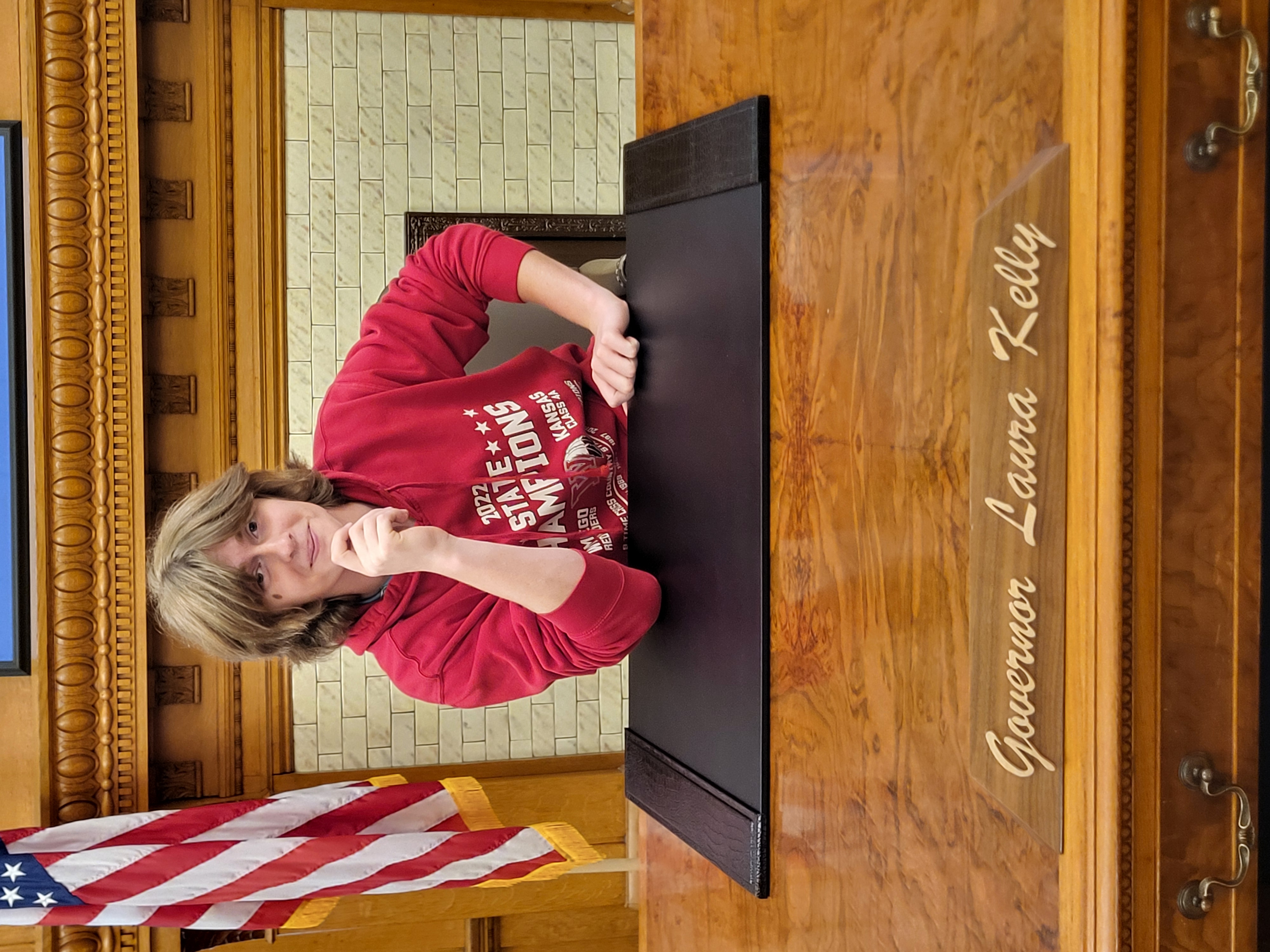
Fultz is from Wamego. He majors in Russian, Eastern European & Eurasian studies and linguistics. In the future, he plans to attend graduate school to study linguistics.
Galindo is from El Dorado. She just completed her master's in Russian, East European & Eurasian studies and a certificate in women, gender & sexuality studies. Since 2013, Galindo has followed the Eurovision Song Contest and has been a freelance writer for fan sites dedicated to the contest. In the fall, she will start her Fulbright fellowship as an English teaching assistant in Uzbekistan. Galindo hopes to pursue a doctorate in Slavic and Eurasian studies and continue to combine her interests.
CREES is dedicated to advancing the interdisciplinary study of Russia, Eastern Europe and Eurasia among students, faculty and community members in Kansas and beyond, aspiring to serve as the leading resource on its world area in the Great Plains. CREES seeks to showcase the diverse histories, cultures and societies of Russia, Eastern Europe and Eurasia, explore the region’s relevance to global affairs, train the next generation of experts and promote international understanding at the university and in the community. Learn more about CREES.