FOREST Collaborations: Choreographer using grant for ongoing nature project
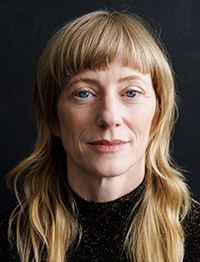
LAWRENCE — Shannon Stewart is pleased that the work she has done over the past couple of years in ecological choreography has been recognized by one of the most prestigious American artistic grantmaking organizations still standing.
Earlier this month, the assistant professor at the University of Kansas Department of Theatre & Dance received a $10,000 unrestricted grant that comes with one of 53 inaugural State of the Art Prizes from the New York-based Creative Capital Foundation. Creative Capital cited one artist from each state, plus Washington, D.C.; Guam and Puerto Rico.
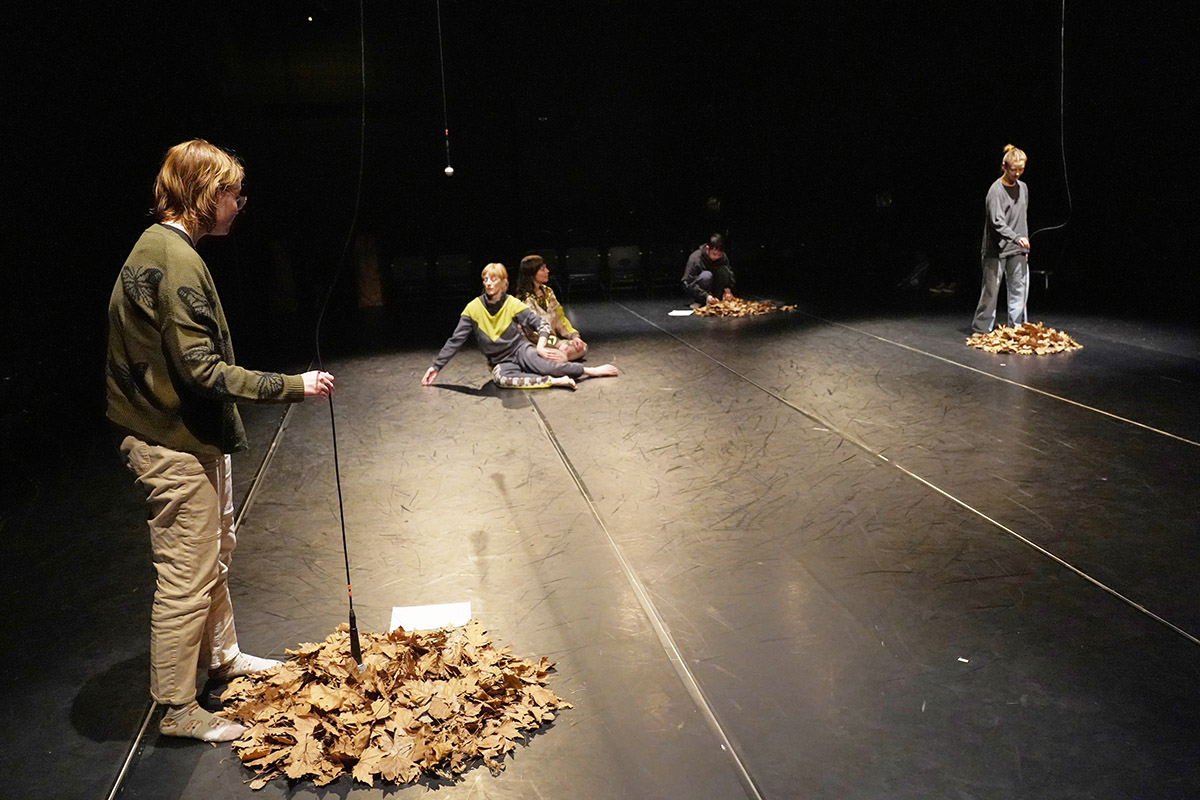
Stewart said she would use the money for the further iteration of a larger project she calls “FOREST Collaborations.”
“My collaborator Tahni Holt and I have been working on this project for two years in different locations, exploring human and nonhuman relationships, specifically with trees and forests,” Stewart said. “And so we have a really big vision that involves dozens of people in three locations. Each iteration builds toward the next one.”
Stewart said that she was inspired by forests while growing up in Washington state — but also while living in New Orleans, Detroit and now Kansas. The larger “FOREST” project spans all those locations, she said.
“Many Northwest choreographers I worked with as a dancer are working with environmental ideas and working outdoors, and it took me a long time in my practice to circle back to that, because as a young dancer and choreographer, I was interested in the theatre as a space, primarily, and doing difficult things on stage,” she said.
“And then my practice became more and more focused on somatic exploration in various places — sometimes nightclubs, sometimes galleries and parks, but also still in the theatre. I became interested in working with perception and sensation as research elements. Doing this would inspire the performance idea itself, rather than having a specific topic and then making up a sequence of movements and scenes to explore it, as is often the case in dancemaking. I have been using somatics in choreographic research for the last 10 years.”
Likewise, each location of “FOREST” has its own inspiration, its own frame, for Stewart.
“The Detroit project is based in my neighborhood, where they’re planting giant sequoia trees for the future, because the climate is changing, and they think coastal redwoods will actually do well in Michigan,” she said. “I am also inspired by Detroit’s history as the birthplace of techno music. That is where it started. And sometimes in these packed club environments, I experience another kind of forest — of people dancing. That’s also part of the city. And so where those two things meet is an interesting creative thing to explore: What is a built environment, and what is a natural environment? How are they both things at once?”
On April 25, just south of Lawrence, Stewart will use some of her Creative Capital grant as well as an award from Outdoors Unscripted to choreograph and stage a dance for the opening of the new Rice Woodland nature trail within the Baldwin Woods portion of the KU Field Station, which is managed by the Kansas Biological Survey & Center for Ecological Research.
“Everything happens in tree time, which I really appreciate, even though it is not always compatible with institutional and production deadlines,” Stewart said. “It takes a long time for these things to gestate and start to produce. And so it’s been already a couple of years of starting these relationships and exploring what’s possible.
“I've been working with manager Sheena Parsons at the KU Field Station, where they are opening part of the Baldwin Woods preserve to the public this spring.
“It has been preserved and used as a research forest, and now they’re opening a section of it to public access to walk on trails in the woods. And so, as part of that opening, we’ll be doing some sort of performative intervention. I’m excited to work with the woods as an artistic collaborator and to work in a much larger performance space than a theatre. I hope it creates a new way for visitors to experience time in nature and think about our orientation to it overall.”