Enslaved people transformed clothing into instruments of rebellion, research reveals
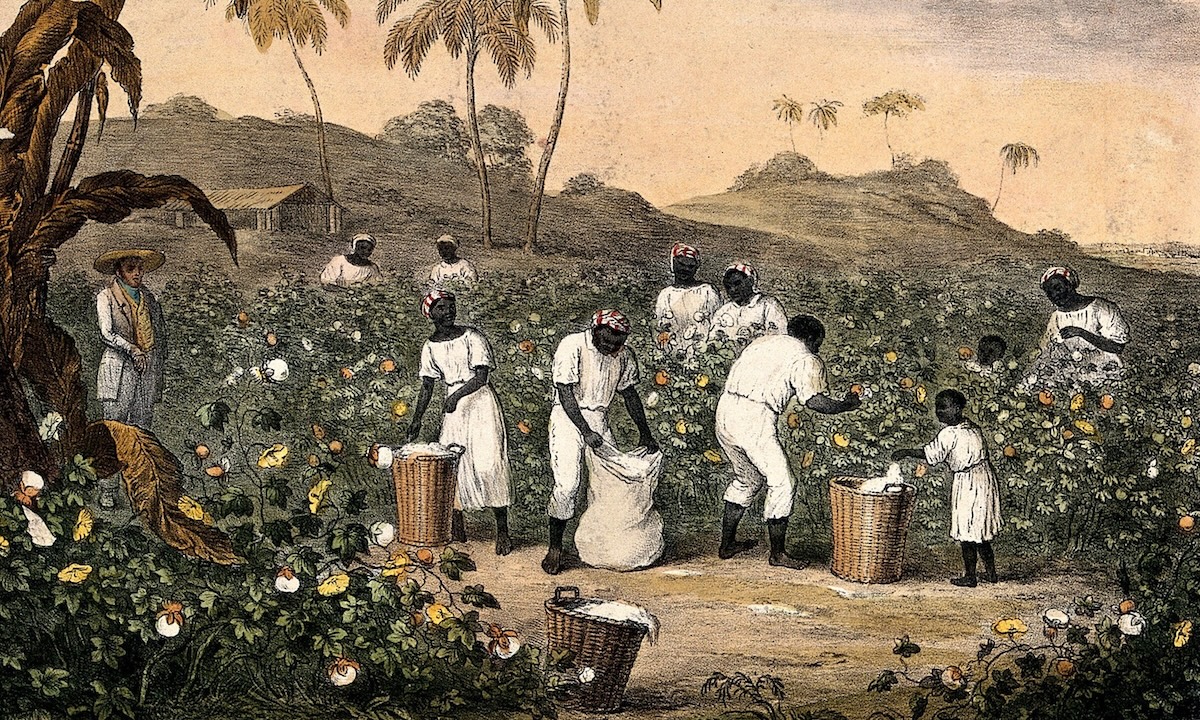
LAWRENCE — As it relates to Black bodies and Black individuals, clothing is always “politicked,” according to a University of Kansas researcher.
“What you can and can’t wear also connects to a certain creative expression and therefore independence,” said Zay Dale, assistant professor of English. “It’s also important to know that clothing is not just important now, but it always has been.”
Dale investigates this in a new article titled “Fiber to Flesh: Textiles and Black Resistance in Slave Narratives.” His essay reveals how textiles operated as violent aesthetic tools in the formation of Black existence during American slavery, exposing why enslavement was lived on the surface of the body through clothing. But, Dale wrote, enslaved people transformed these fibers into instruments of refusal, creativity and ontological reclamation.
The essay appears in the journal Humanities.

The professor first became interested in this topic after viewing runaway slave advertisements from the 18th century.
“If you look at these advertisements, often there’s going to be a mention of some type of clothing. These ads would say something along the lines of: Runaway slave ‘blank’ was wearing an osnaburg shirt or trousers and they were ripped by the waist or by the knee. The slave owners could then trace the enslaved by way of these particular textiles and their demarcations,” Dale said.
The Negro Act of 1735 coded into law what a slave could and could not wear. This instituted osnaburg — a coarse, durable fabric made from flax — as the main uniform. (It was originally named osnabruck because it came from Osnabrück, Germany. At some point, the American bastardization took hold.)
“The enslaved started creating a kind of Black vocabulary with this clothing,” he said. “They were forced to wear these fabrics by law. But they were changing them and therefore resisting slavery by showing this cultural expression.”
The most notable way in which the wearers altered the mandated apparel was to rub it up against dirt or bark.
“They would take the unbleached osnaburg and create this beige or brown, polychromatic Black vision of resistance through being unlawful, through changing something that you’re not supposed to change. It also created a rebellious vocabulary because only the enslaved knew what they’re doing at this time,” Dale said.
Author Booker T. Washington wrote that when he was a slave as a child, he wore osnaburg. Since osnaburg is made from flaxseed, it’s extremely uncomfortable and could cause cuts to the skin.
“Oftentimes, the older siblings would wear these harsh fabrics to wear them down, which is a form of resistance as well,” Dale said. “And this makes me think, what does it mean for an enslaved individual to showcase their humanity by wearing a younger sibling’s textile to make them softer?”
Dale said he was surprised enslaved individuals put so much thought into their clothing.
“You would assume that clothing would be an afterthought to their entire lives. But it wasn’t. It was frequently the first thing mentioned in many of these slave narratives as the enslaved talked about being children,” he said.
He cites a famous quotation from former enslaved-turned-abolitionist Olaudah Equiano: “I laid out above eight pounds of my money for a suit of super fine clothes to dance with at my freedoms.”
“The fact that Equiano is thinking of freedom in relation to clothing, that’s significant,” Dale said.
What is also misunderstood about this period is the way in which the enslaved created a global economy, not just for America but for many European countries, he said.
“America is getting wealthy because of England’s consumption of cotton during slavery. But what is interesting is that others like the Scottish are also getting very rich. They’re the ones selling osnaburg fabric to slave owners in America because osnaburg is relatively cheap to make during this period,” Dale said.
For instance, yards of Scottish osnaburg went from 0.5 million to 2.2 million sold in just a six-year span (1747-1753).
Having come to KU six months ago after earning his doctorate from the University of Notre Dame, Dale primarily focuses his research on Black American literature and 20th century literature. He is currently working on a book titled “Black Radical Aesthetics of Literary Violence 1896-1956.” He said he hopes to incorporate his latest research into a subsequent book also titled “Fiber to Flesh: Textiles and Black Existence in American Slave Narratives.”
“We often think we know it all about American slavery,” Dale said.
“But when we find these acts of resistance — or when we find enslaved individuals who are doing this creative, rebellious work — it makes us rethink what we know about slavery. To this day, we’re still learning about the importance of clothing as it relates to politics and the environment. To this day, we all make careful choices on what we wear because as the old aphorism goes, ‘You are what you wear.’”