KU expanding job opportunities for disabled Kansans through state investment
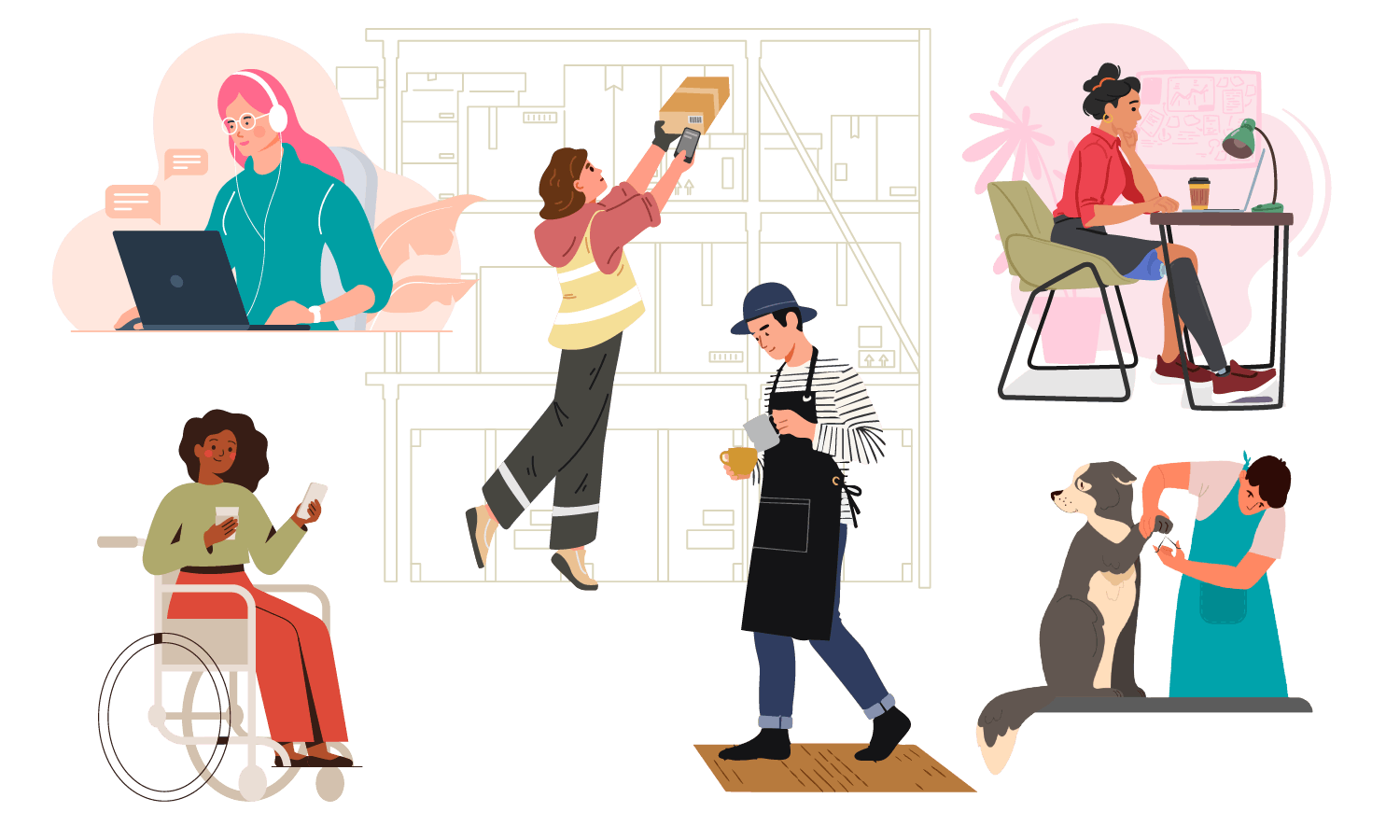
LAWRENCE — People with disabilities want to work. They bring value to businesses and contribute to organizational success. These are points that University of Kansas researchers have heard repeatedly as they work to build capacity for employment opportunities around the state.
But expanding employment options for those with disabilities relies on improving the network of service systems that match people’s strengths to the needs of businesses. It also involves educating employers about the benefits of hiring people with disabilities.
A research partnership between the state of Kansas and KU researchers has demonstrated that not only is this possible, but it can far exceed initial expectations. With the goal of employing 20 individuals in its first phase, the project saw nearly 200 Kansans with disabilities gain employment by the end of last year.
In 2026, KU researchers launched the second phase of the Kansas Employment First project, expanding access to competitive integrated employment for Kansans with disabilities.
First funded by a $1.3 million grant from the Kansas Department of Aging and Disability Services, the project has received $967,500 in additional support from KDADS for the second phase. The project is being led by KU Life Span Institute researchers from the KU Center on Disabilities (KUCD) and the Institute for Health and Disability Policy Studies (IHDPS), in partnership with the Washington Initiative for Supported Employment (WISE) and the Institute on Community Inclusion (ICI) at the University of Massachusetts at Boston.
“This is a systems change project,” said Evan Dean, associate director of community engagement at KUCD and a lead researcher for the project. “Organizations want to re-think how they are providing services for competitive integrated employment. This means they are changing how they support the people they serve, how they train their staff and hire staff, how they collect data on outcomes, and how they engage with businesses — because this is a whole different skill set. And the organizations are responding.”
In 2011, Kansas was the first state in the nation to establish “competitive integrated employment,” or work structured among people with and without disabilities for competitive wages, as the first option for employing people with disabilities. Thirty other states followed, adopting what is called “Employment First” legislation.
Phase II of the project launched in 2026 and will expand training and technical assistance to KDADS and service organizations that support people with disabilities to advance Employment First across the state.
“This is something that people really want,” Dean said. “People with disabilities want to live lives like everybody else. The service system is building capacity to support people to live the lives they want to live, and people are responding very positively.”
The basics of competitive integrated employment (CIE)
People with disabilities across the U.S. face obstacles to equitable employment, even though it has been shown to benefit both individuals and the state when more people work.
Individuals with disabilities who work have better health outcomes, multiple studies have shown. Better health means lower costs for about 1 out of 3 adults on Medicaid who have a disability (PDF). More people employed also means more taxpayers contributing to the economy.
“This work benefits not just the people with disabilities themselves but the economy of the state of Kansas,” said Noelle Kurth, a researcher at IHDPS involved in the project. “More people employed and paying taxes is a good thing for the state.”
People with disabilities employed at fair wages also have lower rates of poverty, greater independence and a higher quality of life than those who are unemployed or work in segregated settings.
Under a 1938 statute, however, tens of thousands of disabled adults legally earn less than the federal minimum wage, with no limit on how little they may be compensated for their work.
Additionally, subminimum wage employees, such as those working in segregated sheltered workshops, are unlikely to move beyond that type of work. As few as 5% of these workers transition into employment in the community, according to government audits. This is part of why average monthly income for an adult with a disability in 2017 was $213.76, according to the U.S. Commission on Civil Rights (PDF).
From pilot to progress, KU’s role in advancing employment first
Phase I of the project focused on developing a system to support competitive integrated employment for individuals on a small scale before expanding it across the state. Researchers worked with four businesses, and they hoped that each business would successfully employ five participants by the end of the project.
Researchers thought it would take a year before the people in their project could start securing employment, but the project took off within a few months. By the end of phase one, 10 times as many people as they had hoped were employed. Eighty-two percent of them were still employed as of Dec. 1, 2025, with an average hourly wage of $13.76.
“We were blown away when 200 people served by those organizations ended up getting jobs,” Dean said.
In a report shared with state partners (PDF), the researchers reported that the most common job sectors for participants achieving competitive integrated employment were in retail and customer service (32.7%) and food service (24.6%), followed by manufacturing and trades (17.6%) and janitorial or hospitality (14.6%).
Another reason for Phase 1’s success was the range of support services for participants. These included job development services, career discovery activities, targeted case management, vocational rehabilitation and personalized job support, among others.
Moving into Phase II, researchers hope to scale up their efforts to help even more Kansans with disabilities find competitive integrated employment.
To do this, researchers are developing a network of training and technical assistance to support employers throughout the state.
Dean cautioned that its initial success might be harder to surpass as the program continues and expands, but researchers are hopeful continued success will help the goal of Employment First continue to grow over time.
“We're trying to temper expectations a bit with this new round,” Dean said. “The duration of the project is shorter, and I think the organizational shift may take a little longer with some of the organizations we're working with now.”
Tracking employment outcomes for Kansans with disabilities
A key part of making sure Phase II is successful is being able to track its progress. To do that, researchers need to develop a comprehensive way to track data statewide.
Currently, data collection is piecemeal, with every organization or provider collecting data on their own and in their own way.
As the project continues, researchers want to be able to answer questions like, what’s the employment rate for people with disabilities? What kind of jobs are they getting? That takes time and money.
Dean said that research conducted by the Institute for Community Inclusion (ICI) at UMass Boston is being used as a model to track how states are dealing with integrated and competitive employment for people with disabilities.
Kurth added, “There needs to be a system, and it's expensive and time-consuming to do that, but it's necessary to measure impact. You have to show that it works, absolutely. Or if it doesn’t, make changes.”
The impact of competitive integrated employment for Kansans
As a legislative liaison for the Self Advocate Coalition of Kansas, Colin Olenick tracks bills and testifies before state officials about the impact of legislation on people with disabilities, including himself.
The first steps of his career journey began with the job coach who supported his employment goal of working at a movie theater.
His job coach picked up an application, helped him fill it out, sat with him at the local library and talked him through the motions of tearing tickets. For Olenick, who has cerebral palsy, this wasn’t easy. But his coach’s encouragement was key to helping him reach his goal — and setting new ones.
He remains passionate about the rights of disabled people to access competitive integrated employment, or as he explains it, “real jobs for real wages.”
“I get paid to advocate for myself and others to improve the quality of life of people with disabilities,” he said.