KU hydrologist receives Fulbright Scholar Award to research High Plains aquifer
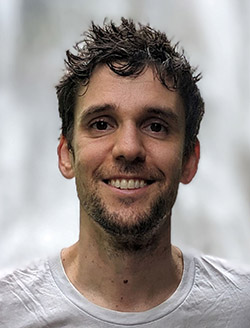
LAWRENCE — Sam Zipper, an ecohydrologist at the Kansas Geological Survey and assistant professor at the University of Kansas, has received a Fulbright U.S. Scholar Program award from the U.S. Department of State and the Fulbright Foreign Scholarship Board.
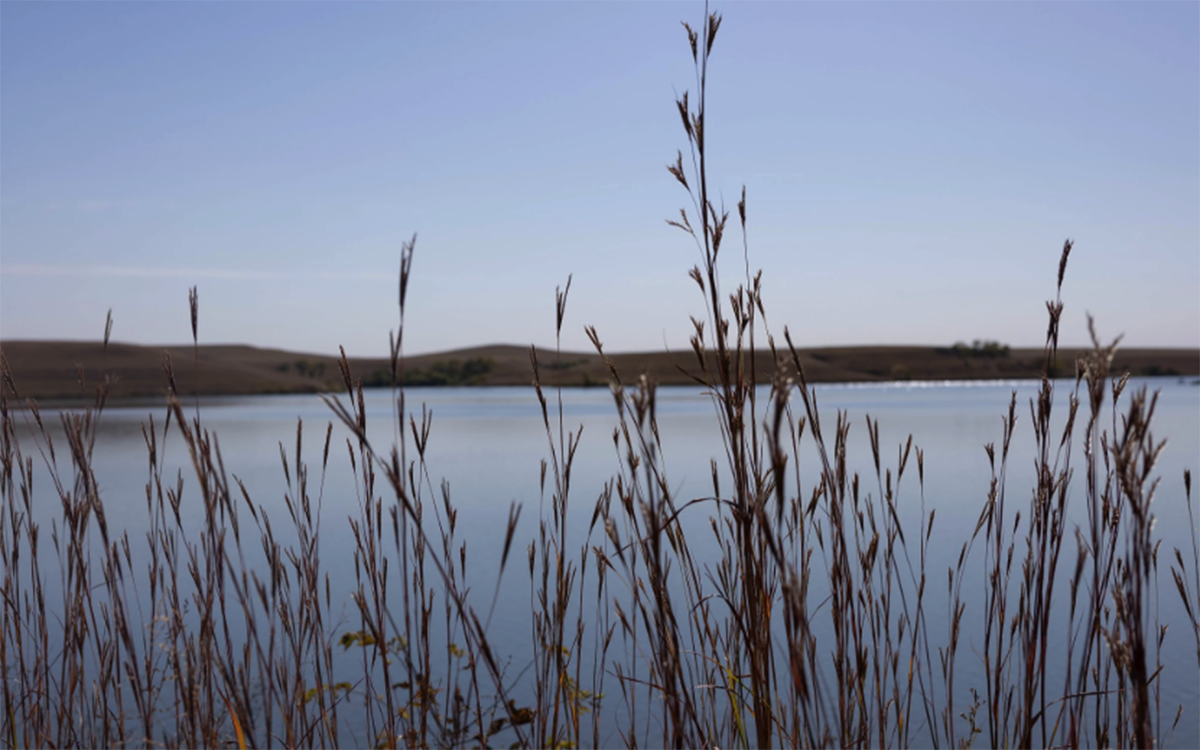
Zipper will travel to Sweden for the fall 2026 semester to conduct research at the Stockholm Resilience Centre at Stockholm University and the Beijer Institute of Ecological Economics at the Royal Swedish Academy of Sciences. These collaborations will expand Zipper’s existing research on the High Plains aquifer, a vital underground water source that spans parts of seven states, including much of western Kansas, and supports a multibillion-dollar agricultural economy.
“While water levels have declined across much of the aquifer over the past 70 years, collective conservation efforts during the past decade have reduced groundwater decline rates while keeping farms economically viable,” Zipper said. “Making water-smart decisions requires understanding how individual actions connect to the larger regional water picture.”
Zipper will work with Lan Wang-Erlandsson, a Stockholm Resilience Centre researcher who studies how land use affects rainfall dynamics, and Anne-Sophie Crépin, an environmental economist specializing in interactions between society and nature. Through this collaboration, the team will assess how pumping affects not just groundwater levels but also rainfall patterns and regional economics.
“I’m very excited that we finally can put our expertise together to investigate the intricate connections between economic incentives driving land use change, agricultural production, and surface, atmospheric and underground water flows," Crépin said.
“Kansas’ water resources are under stress, but the story’s not over yet,” Zipper said. “This is an opportunity to work with some of the world’s leading water scholars to better understand our local water resources and also share the lessons we are learning here in Kansas worldwide.”
Zipper has been at KU since 2019 and leads the HydroEcology of the Anthropocene Lab (HEAL) jointly between the Department of Geology and Kansas Geological Survey (KGS). HEAL has been supported by the U.S. Department of Agriculture, NASA, Foundation for Food & Agriculture Research and the National Science Foundation.
Fulbright provides opportunities for exceptional Americans and participants from 160 countries and locations to study, teach and conduct research abroad. The Fulbright Program is marking its 80th anniversary in 2026, which coincides with America's 250th anniversary celebration. For eight decades, Fulbrighters have been leaders at the forefront of discovery and innovation, conducting cutting-edge research, advancing critical industries and preparing future generations with new skills and perspectives. Fulbright is a program of the U.S. Department of State with funding provided by the U.S. government. Participating governments and host institutions, corporations and foundations around the world also provide direct and indirect support to the program.
The KGS is a nonregulatory research and service division of KU. KGS researchers study and provide information about the state’s geologic resources and hazards, including groundwater, oil and natural gas, critical materials and earthquakes.