Law expert’s analysis tracks how international trade is being dismantled

LAWRENCE — In 2015, Pope Francis said, “We are not living in an era of change, but a change of era.” A decade later, the breakdown of norms in international trade has shown just how right the former pope was, a University of Kansas trade law expert wrote in a new research article.
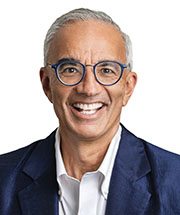
Raj Bhala, University Distinguished Professor of Law at KU, has published “American Tariffs and the Change of Eras in Global Trade,” a peer-reviewed analysis of the unprecedented shifts caused by new tariff regimes. In the article, Bhala also examines how the international rule of law can be saved, if it is in fact worth saving.
More than simple change, the post-Second World War multilateral order is being destroyed, according to Bhala. In the analysis, he asks three foundational questions: How is international trade law being destroyed, why is it being destroyed, and is it worth preserving?
“The answers offered are: 1) through a series of ‘America First’ unilateral trade measures, all of which violate international trade law, and some of which likely violate U.S. law; 2) to onshore or reshore industries and jobs, but in truth, because of xenophobic autarky; and 3) yes, because ‘America First’ hurts America most by eroding its economy, political soft power and military alliances,” Bhala wrote.
The questions are posed and addressed in a nonpartisan manner. While the greatest changes have happened during the presidency of Donald Trump, Bhala highlights how conditions before Trump’s first term led to fundamental questions about the nature of trade and how Joe Biden continued and even increased many of the tariffs, especially against China, which started during the first Trump term.
In answer to the first question, Bhala said that international trade is being dismantled by America’s unilateral trade measures, which violate international law. They include the imposition of tariffs on nations around the globe and disregard of several treaties, including the 1947 General Agreement on Tariffs and Trade, World Trade Organization texts and free trade agreements such as NAFTA and USMCA.
As to the question of why international trade law is being destroyed, Bhala said that the stated reasoning is to put American manufacturing first, but in truth the answer is deeper. It’s due to a term he coined “xenophobic autarky.”
“This term means a misguided impulse to onshore or reshore industries and jobs in lieu of trade (autarky) owing to a distrust, even dislike, of foreign sources of goods and services (xenophobia),” Bhala wrote.
Finally, Bhala said that international trade is, in fact, worth saving.
“The rule of law is worth preserving for many reasons — one of which is, if we don’t, we go back to the Hobbesian world that is nasty, brutish and short,” Bhala said. “In that world, the strong may think it would benefit them, but forcible dominance is not sustainable politically and does not fit within capitalism, which to flourish allows for decentralization and creative destruction.”
Canadian Prime Minister Mark Carney highlighted such problems in his 2026 Davos speech, Bhala said. Carney pointed out the old-world order is changing and middle powers such as Canada must band together in variable configurations and de-risk from traditional powers and allies that no longer can be trusted.
U.S. actions have also pushed NATO to the brink of collapse and driven trade allies such as India, Canada and Brazil to do business with adversaries such as China and Russia, Bhala said. Indeed, both the United Kingdom and European Union have new trade deals with India.
The study was published in the Transatlantic Law Journal special issue on tariffs and trade.
Just as the conditions and factors that led to the current change of era are multifaceted and complex, preserving the rule of law will be more difficult than simply changing course or reversing a policy, according to Bhala. However, these three questions must be addressed, and the goal is to help create a dialogue among policymakers, lawyers, legal scholars and the world’s trade powers.
“We ask these questions at social events. We ask them in class. What are the big-picture questions? These are the big three,” Bhala said. “Prime Minister Carney basically asked these questions about international relations: Can they be preserved, and should they? I want to support efforts to rebuild strong ties among powers like the U.K., EU and United States, ties inclusive of middle powers, and to preserve international trade law — perhaps all the more so as a dual U.S.-Canadian citizen.”