Mini Wheat State Tour highlights efforts to preserve Atchison’s history
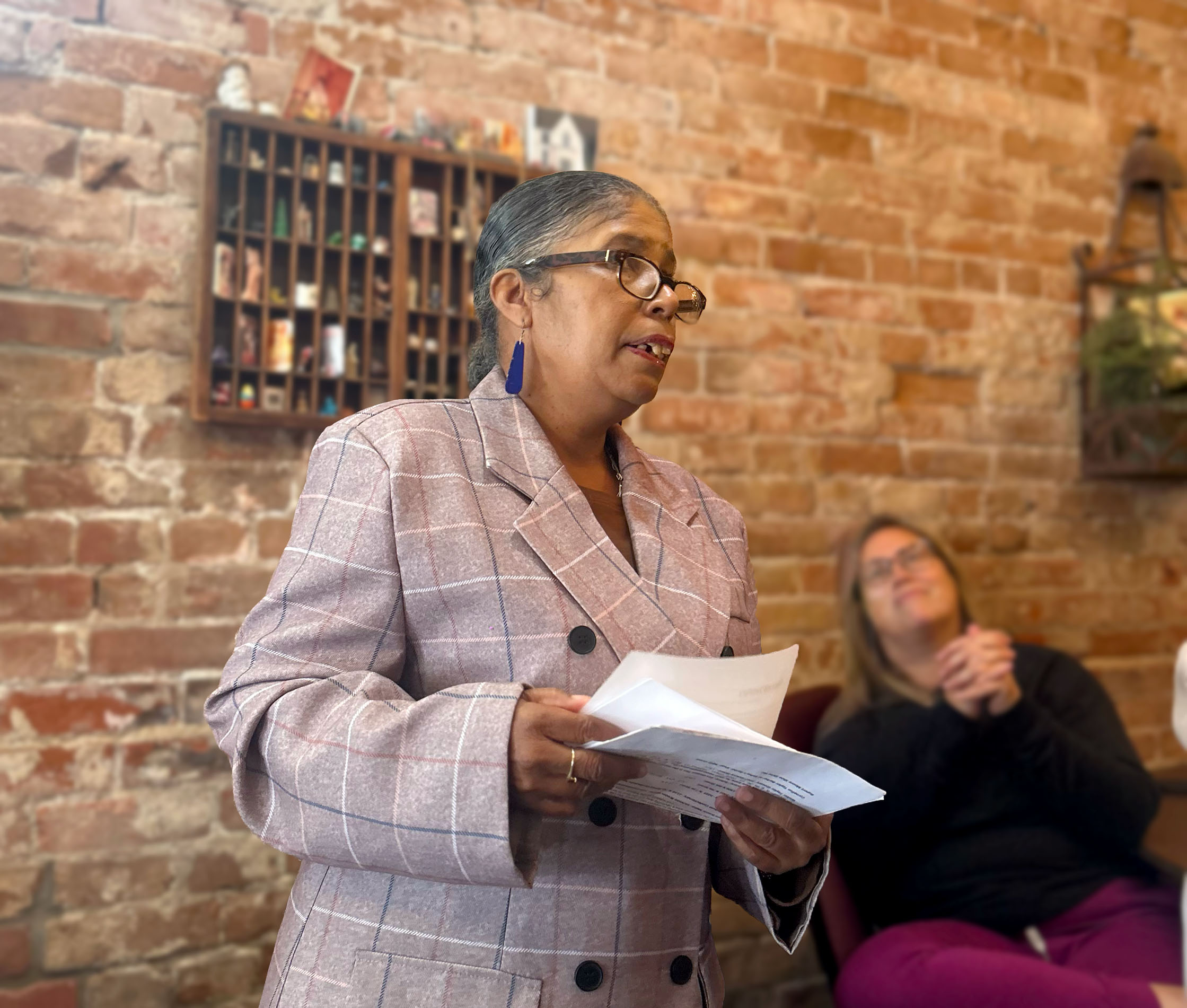
LAWRENCE — “We started with no money, only a dream of revision about how we could save these buildings.”
That’s how Patty Boldridge and her sister Sonya, members of a family with deep equestrian roots in Kansas, describe the beginning of their efforts to preserve Atchison’s historic Black Business District, a once thriving area filled with grocery stores, cafés, barbershops and other gathering places that served generations of residents.
On Nov. 6, the Hall Center for the Humanities’ Mini Wheat State Tour brought a group of University of Kansas faculty and staff to Atchison, where the Boldridge sisters shared their work to protect and restore a row of historic buildings once central to the city’s Black-owned business community. Both lifelong Atchison residents and members of the Atchison County Historical Society, they have led grassroots efforts to research, preserve and reimagine the district as a cultural hub for future generations.
“It’s not in book form, but we needed to save these stories that we kept finding,” Patty Boldridge said. “(The Black Business District) has historical and cultural significance, not only to the African-American community, but its integrity for Atchison all the way around.”
Their current project includes transforming one of the surviving structures into the Black Business District Museum, which will highlight the lives and legacies of Atchison’s Black entrepreneurs from the late 19th through mid-20th centuries, and to turn another of the restored buildings into a business incubator, providing young people in Atchison with mentorship and space to launch their own ventures.
The sisters spoke with KU participants during a lunch stop at Paolucci’s Restaurant, founded as a grocery by Italian immigrants in 1894.
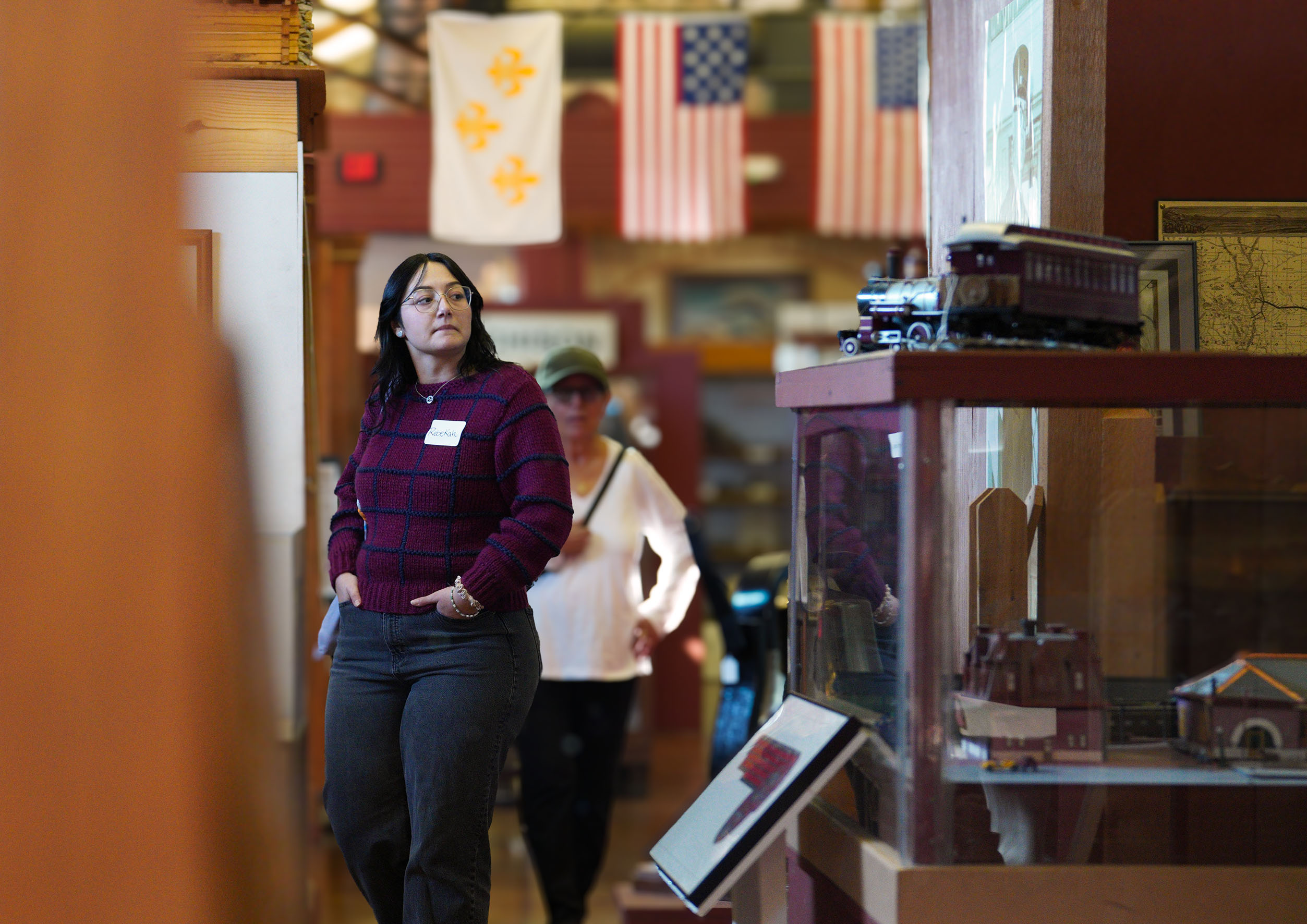
At the Santa Fe Depot, participants explored an old caboose from the Atchison-Topeka-Santa Fe Railroad, and Steve Caplinger, director of the Atchison County Historical Society, shared stories about the city’s namesake, former senator and president pro tempore, David Rice Atchison, as well as fervent abolitionist Pardee Butler and 1902 Corn Carnival Queen Laura Parker.
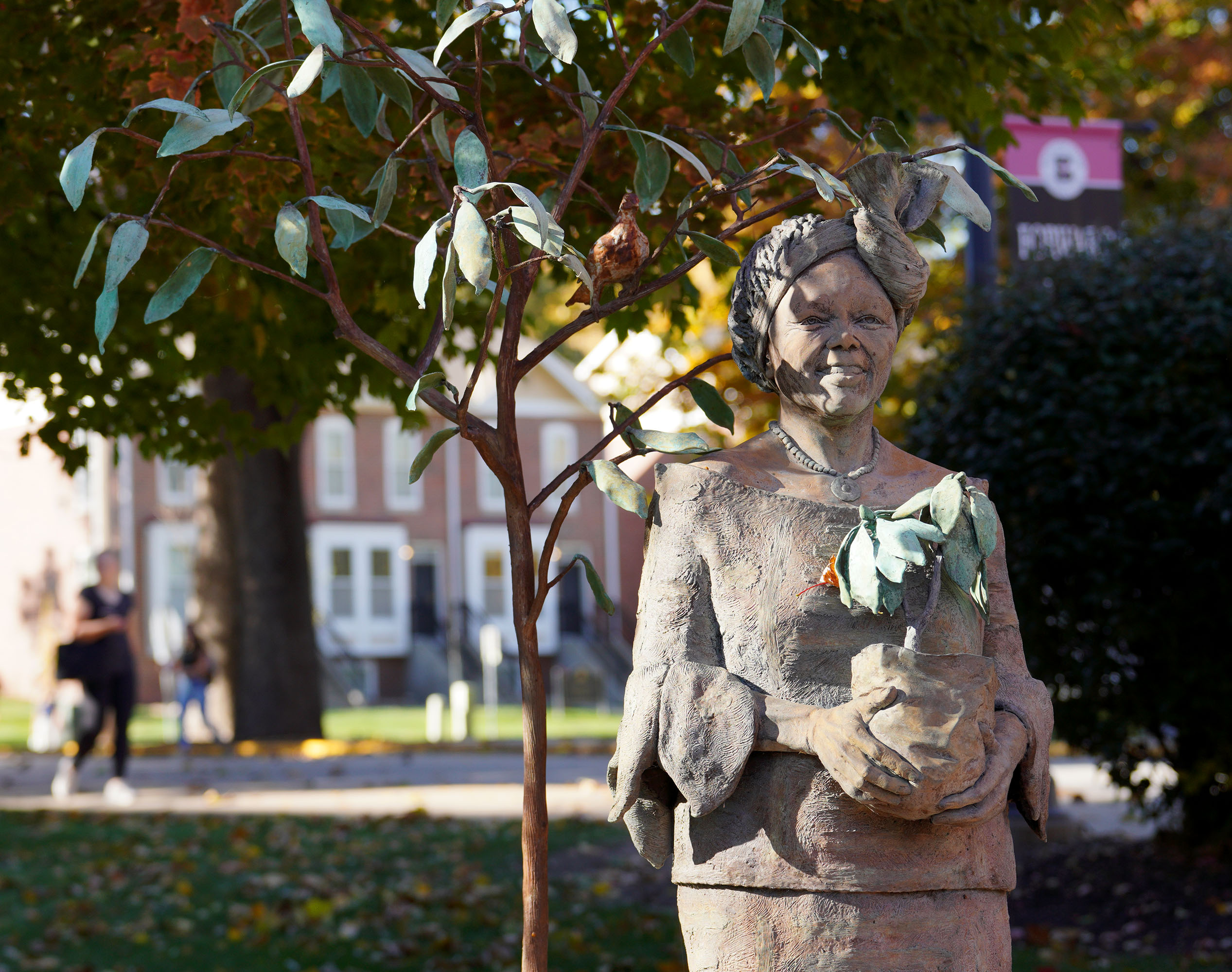
Other stops on the Atchison tour included Independence Creek, where Rachel Schwaller, lecturer in the University of Kansas departments of History and Religious Studies, discussed the Lewis and Clark Expedition; the Amelia Earhart Hangar Museum, where Sean Seyer, associate professor in KU’s Department of History, spoke about early aviation law and culture during Earhart’s time; and Benedictine College. There, Ali Brox, associate teaching professor in KU’s Environmental Studies Program, reflected on Wangari Maathai, the Kenyan Nobel Peace Prize winner and Benedictine alum honored with a statue on campus, and Brother Joseph Ryan highlighted "Trinity and Episodes of Benedictine Life," the 1959 fresco by Jean Charlot at St. Benedict’s Abbey.
“This dedication to local history shows exactly why we wanted to continue the Wheat State Tours,” said Giselle Anatol, director of the Hall Center for the Humanities. “Patty, Sonya, Steve and Brother Joe all remind us that Kansas history — which is so incredibly rich — is in the hands of us, as humans, to protect and carry forward.”
This year’s tour was organized by Whitney Yi Knapp, graduate research assistant at the Hall Center for the Humanities. The first Whirlwind Wheat State tours began two decades ago in the KU Chancellor’s Office and were designed to take new faculty and staff across Kansas over the course of a week to gain a better understanding of where many of their students came from and the communities KU serves as a state university.
About the Hall Center
The Hall Center’s mission is to stimulate and support excellence in humanities research, foster interdisciplinary conversations across and beyond the humanities, and make the significance of humanities scholarship visible to a range of communities across the state.