New report presented to EPA evaluates future of ‘cumulative impact assessment’ on vulnerable communities
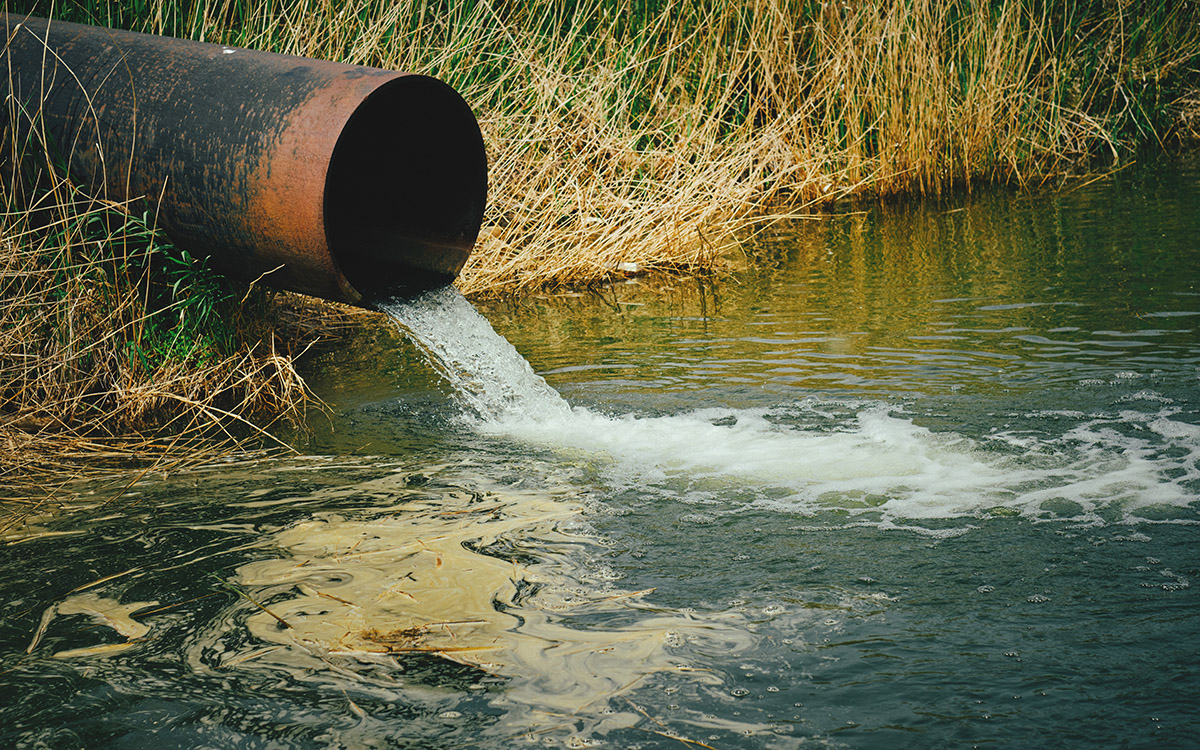
LAWRENCE — A “cumulative impact assessment” evaluates the combined effects of existing, planned and future actions on a particular environment or community.
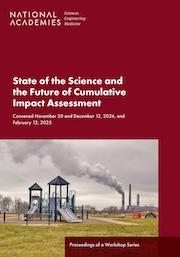
This year, the National Academies of Sciences, Engineering, and Medicine assembled a prestigious ad hoc committee to convene state-of-the-science workshops and develop a consensus report. Titled “State of the Science and the Future of Cumulative Impact Assessment,” the report is presented to the U.S. Environmental Protection Agency as a means of further developing the scientific foundation underlying the practice of cumulative impact assessment.
“The report is important because cumulative impact assessment is an expanded, more comprehensive version of risk assessment. When you propose any large government or industrial project, the federal, state or local Environmental Protection Agency should get as much possible input as they can from as many disparate sources,” said David Slusky, professor of economics at the University of Kansas.
Committee on State-of-the-Science and the Future of Cumulative Impact Assessment
Slusky is one of 16 experts from diverse fields invited to be on the committee, which convened frequently in both closed and open sessions between June 2024 and August 2025. Released Oct. 9, the report draws from public workshops, community and tribal engagement, and a broad array of consulted scientific expertise. It built upon prior National Academies reports highlighting the need to better characterize and manage cumulative exposures, health risks and other effects experienced in diverse populations.
“It’s really fantastic they included a health economist,” he said. “Without one, you could then miss the importance of natural experiments. You might also miss how crucial administrative data linkages are and the breadth of outcomes that should be considered.”
Slusky is the first-ever and only health economist to serve on this committee.
“The idea was, ‘Let’s get physicians, toxicologists, sociologists, environmental scientists, tribal health experts and economists to cover all the bases,’” he said. “We also had an enormous liaison group from all over the country, and a lot of these individuals represent communities that have been hurt by industrial activity – like from those who live in ‘Cancer Alley’ in Louisiana, tribal groups from the Denver area and residents who experienced the water crisis in Flint, Michigan.”
While he had input on the entire 184-page consensus report, the professor specifically wrote the economic section of the methodological approaches chapter. This was structured around how economists look at factors beyond health impacts.
Slusky said, “For instance, toxicologists might ask, ‘How many parts per million of a particular chemical do we have in the water before this is a problem?’ And health economists might ask, ‘OK, but how does it affect test scores? How does it affect employment? Wages? Retirement? Disability?’”
Throughout the process, the wide breadth of considerations that needed to be factored into the research proved most challenging.
“The goal of this was not to define cumulative impact assessment; that was already done,” he said. “The goal was to explain — in a limited number of pages — what are all the different elements, how do they interact together and how do we think about them as a whole framework?”
The report was commissioned by the Biden EPA but completed and presented to the Trump EPA.
Regardless of the administration, Slusky said, “We are speaking to agencies at all levels, not just the federal EPA. California has a very strong EPA. We were even privileged to have the chief sustainability officer at the L.A. Metro Transportation Authority on the committee. This kind of broad engagement shows the potential reach of the report.”
Health economics expertise
A KU faculty member since 2015, Slusky specializes in health economics and labor economics. He has conducted research on a wide variety of topics, including the Flint Water Crisis, COVID-19 restrictions, abortion care, physician birth outcomes and Medicaid. In 2022, he was named executive director of the American Society of Health Economics.
The 2025 report notes how assessments such as these can help scientists and communities “understand the impacts of multiple environmental stressors by accounting for the totality of exposures and their cumulative effects over the life course, providing a scientific basis to help guide more equitable and effective decision-making to improve public health, well-being and environmental resilience.”
“It’s hard to predict which agencies will use this,” Slusky said. “But I do believe all agencies will now have at their disposal a comprehensive list of the kinds of possible assessments.”