‘No more excuse’: KU professor launches research journal for undergraduates
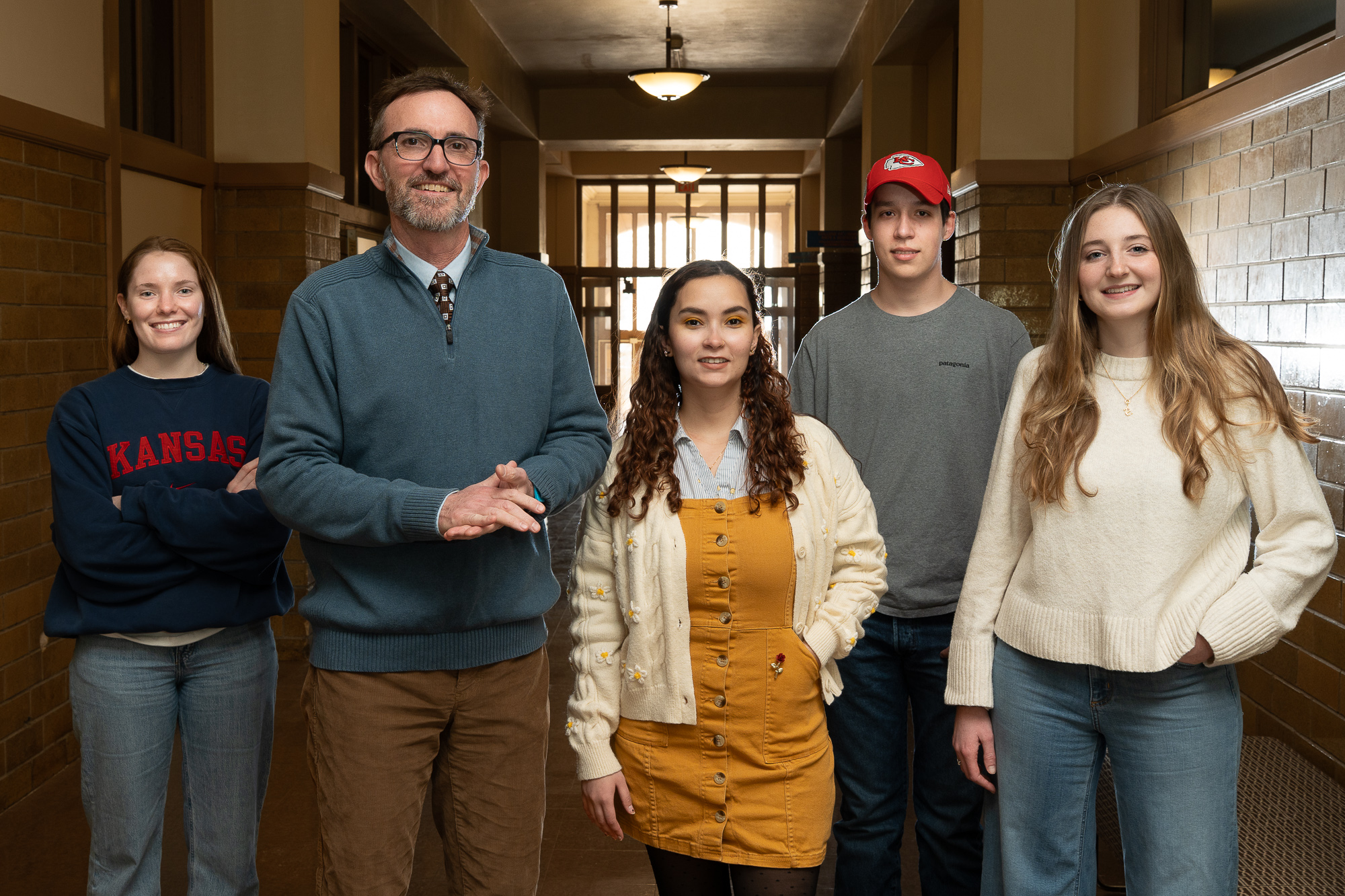
LAWRENCE — After a decade of guiding students through what he calls an “infamously difficult” capstone, Brian Lagotte realized their work deserved more than a final grade and a spot on a shelf: They should be published.
“If the students are putting up with me to do the amount of work I’m demanding of them at the level I’m demanding,” Lagotte said, “then I should get off my haunches and put this journal together. There was no more excuse for me not to put in that kind of work for them.”
That commitment drove Lagotte, associate teaching professor and director of undergraduate programs in Global & International Studies, to create the Kansas Undergraduate Journal of International Studies (KUJIS), an open-access, multidisciplinary journal that publishes undergraduate research on international and global topics. The journal gives capstone projects, among other student work, a new platform.
Turning challenging capstones into publications
For about 10 years, Lagotte has led a capstone course in which students design substantial, semi-independent research projects from the ground up. Many students have gone on to present at the National Conference on Undergraduate Research, and a number have successfully placed their work in undergraduate journals nationwide.
“We had never received a rejection for a submitted journal article,” Lagotte said of those submissions, noting the consistently high quality of KU students’ theses. Yet most research projects never made it to publication.
“If there’s one thing an undergraduate does not want to do the summer after they graduate, it’s work on the thesis anymore,” he said. “So many amazing theses were just going by the wayside, just being a part of class and being done with it.”
To remove that barrier, Lagotte designed KUJIS so that its submission guidelines closely match his existing capstone article assignment. For most students, that means virtually no tweaking is required beyond the work they already complete for class.
Collaboration at the core
With support from Marianne Reed and Eric Bader of KU Libraries, Lagotte established KUJIS on the Libraries’ journal platform.
"They gave me innumerable tips," said Lagotte, "and they have built an amazing structure of logistics to do the journal part of it."
With the platform in place, he looked to his students to power the journal’s editorial engine.
“I was expecting one or two students to be willing to serve as editors,” Lagotte said. “I had nine students volunteer out of a cohort of 33.”
Besides helping establish a new journal, the student editors gained hands-on experience with duties less common in classrooms.
“They’re getting good at skills that people really would pay them to do, but they don’t know the name of the job yet,” he said. By working as editors, students develop abilities in copy editing, evaluating arguments and managing manuscripts — skills that map onto roles in think tanks, NGOs, publishing and other research-focused organizations.
Student editors for the first volume, published in December 2025, included Shea Marney, Isabel López, Kennedy Mulvaney, Marina Bontrager, Andrew Fewins, Grace Yearout, Hannah Loub, Bhavya Gupta and Eilish Frissell.
A wider stage for undergraduate research
KUJIS publishes undergraduate research on international or global topics from disciplines such as international studies, political science, cultural studies, anthropology, economics, sociology and gender studies.
Lagotte said he envisions the journal growing in three stages: first, staying at least one volume ahead by drawing on the steady pipeline of capstone projects; next, attracting submissions from other disciplines at KU; and ultimately, welcoming work from undergraduates across Kansas and, in time, from campuses across the country.
“Undergraduates are capable of far more than they think,” Lagotte said. “When they’re pushed to do authentic research, not just a class paper, the level of work they produce is really impressive. KUJIS is one more way to make sure that work doesn’t just disappear after graduation.”