One size does not fit all when it comes to return-to-office policies, study finds
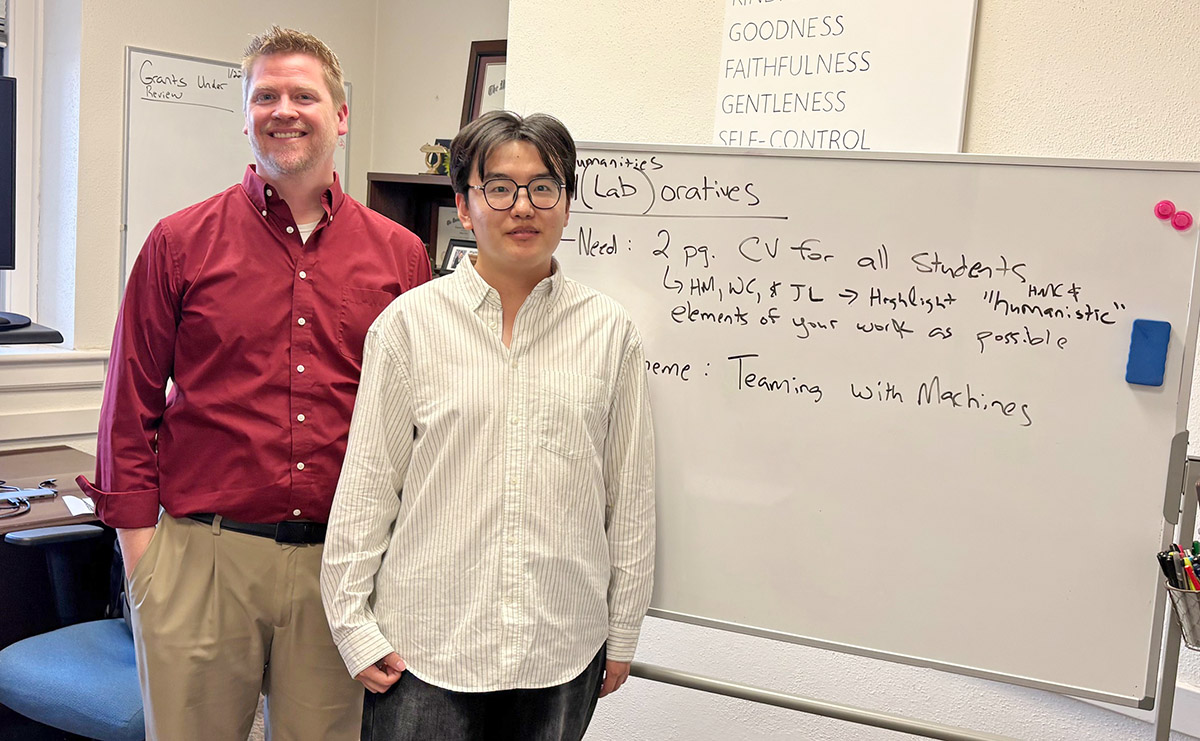
LAWRENCE — Forcing a return to full-time office work, as many companies did when vaccines ended the COVID-19 pandemic lockdown, is not the optimal solution for workplace productivity for everyone, according to new research from the University of Kansas.
Rather, according to the results of a new study co-authored by two KU communication studies researchers, “job tailoring” — where companies align job requirements to the knowledge, skills, abilities, or, in this case, personality of the worker — makes the most sense.
Cameron Piercy, associate professor in the Department of Communication Studies, and KU doctoral student Wenrong Cui published “Big five traits and self-determination in preferences for working in person: the moderating role of communication overload” on Jan. 15 in the Journal of Communication Management. With their co-authors Stephanie Smith of Virginia Tech and tech entrepreneur Yaguang Zhu, they polled 301 working adults “to examine associations among personality traits, self-determination needs, workplace preferences and Communication Overload.”
Based on previous research, the “Big 5” traits are:
- Extraversion
- Conscientiousness
- Neuroticism
- Openness to experience
- Agreeableness.
The authors also account for “Self-Determination Theory” — the degree to which a person values three main qualities: autonomy, competence and relatedness.
They found that layering on top of those factors the condition of communication overload — i.e., having to deal at high speed with a large number and type of communications per hour or day — affected people in some unexpected ways:
- People who highly value relatedness and extraversion prefer in-person work, regardless of CO.
- But people who are highly conscientious, confident of their competence and open-minded are more likely to prefer at-home work when the CO level is high.
- The remaining factors played statistically insignificant roles when it came to CO, per the survey.
“Stephanie, Yaguang and I were on a call after the pandemic, when everyone was readjusting,” Piercy said, “and I asked, ‘Are you all working remotely these days?’ And both of them said, ‘I work at home — I get so much more done.’ And I said, ‘I can’t. I don’t get anything done at home.’ The office is my cathedral — my workspace … and that’s what prompted us to do this study.”
Turns out Piercy is in good company, at least when it comes to certain personality traits.
He said the experiment was aimed at “the zeitgeist right now; this huge move to put people back into the office. Should companies be doing that? Is it right to force everyone back into the workplace? Or is there a benefit from allowing people to work remotely?”
It’s not a simple answer, Cui and Piercy said, but, rather one that ought best be tailored individually.
“The Big Five personality traits are relatively stable,” Cui said, “but companies can alter communication overload in consideration of people’s personality and needs.”
“For me,” Piercy said, “the bottom line is, ‘Who likes to work from home?’ That’s the question that started it. And I think we answer it pretty well. Job tailoring — which is to say altering the conditions of each person’s employment so that that person is the most productive worker possible — is a tool that companies that truly value their workers could use, but most employers usually don’t.”
“So is forcing everyone back to the office going to work? Is that a net benefit? I don’t think so. It’s to be determined.”