Researcher will examine galactic evolution with new ‘Roman’ space telescope
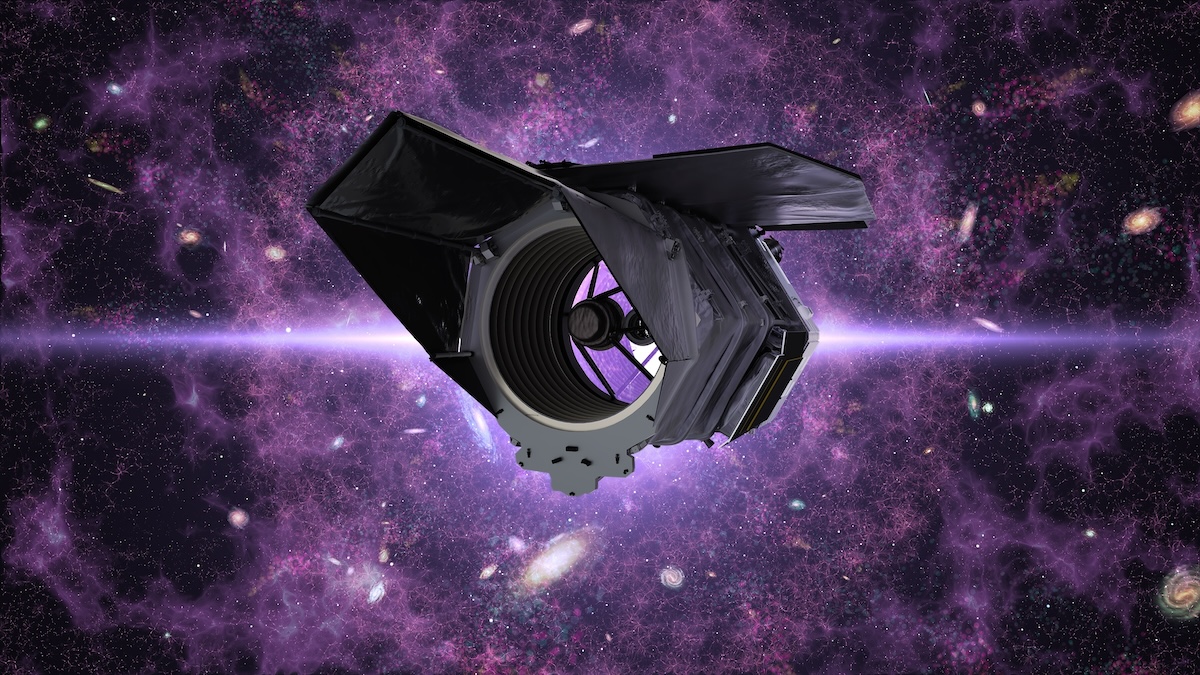
LAWRENCE — Following the successful launch of the Nancy Grace Roman Space Telescope on Aug. 30, a University of Kansas researcher will be co-directing one of its major debut experiments, called GRACE: the Grism Reionization and Cosmic Evolution Survey.
“The Nancy Grace Roman Space Telescope — we call it ‘Roman’ for short — is a thousand times faster than the Hubble Space Telescope at taking data over large portions of the sky,” said Gregory Rudnick, professor of physics & astronomy at KU, who will serve as co-leader of GRACE. “I worked with colleagues at Goddard Space Flight Center and a large team of international researchers to write a proposal to observe 420 hours with Roman and covering an area 10 times the size of the full moon on the sky.”
Rudnick added that GRACE will take spectra of every galaxy in this extensive area by exposing for 40 hours at each location. The spectra split the light from each galaxy into their individual colors and will let the team measure many properties about the galaxies.
“The images and spectra from GRACE will allow researchers to make a detailed 3D map of the universe,” he said. “For hundreds of thousands of galaxies in that map, GRACE team members will measure precise galaxy properties such as their distances, the mix of elements within them, the rate that they form new stars and their detailed shapes. This combination of ultrasensitive spectroscopy over a large area of the sky is unprecedented and will revolutionize our knowledge of the distant universe. By looking at distant galaxies, astronomers can see how they looked when the universe was younger, because light from those galaxies can take billions of years to travel to Earth.”
GRACE is the largest of five general astrophysics surveys accepted by NASA from among 50 proposals. In addition to the new data, the work will be supported by $1.2 million from NASA.
According to co-principal investigator Sangeeta Malhotra, a supervisory research astrophysicist at Goddard, origins of the GRACE project go back more than two decades.
“We started dreaming about a project like this in 2005 as soon as we saw what Hubble could do for spectra of the earliest galaxies — and not just dreaming but also working with colleagues to build the case for the wide field space telescope that was ultimately realized as Roman,” she said. “Now, with the mission launched, we are looking forward to seeing the data from GRACE.”
The project’s observations will target key periods in the evolution of the universe known among scholars as “cosmic dawn” and “cosmic noon.”
“The part of the proposal that I'm leading is focused on what we call cosmic noon,” Rudnick said. “Counterintuitively, we don’t call it cosmic noon because it's halfway between the beginning of the universe and today. The universe is 13.8 billion years old, and cosmic noon actually covers the time range from 2-6 billion years after the universe was formed. However, it is the time period when galaxies in the universe were forming most rapidly. It’s noon in the sense that it’s the peak epoch of galaxy formation.”
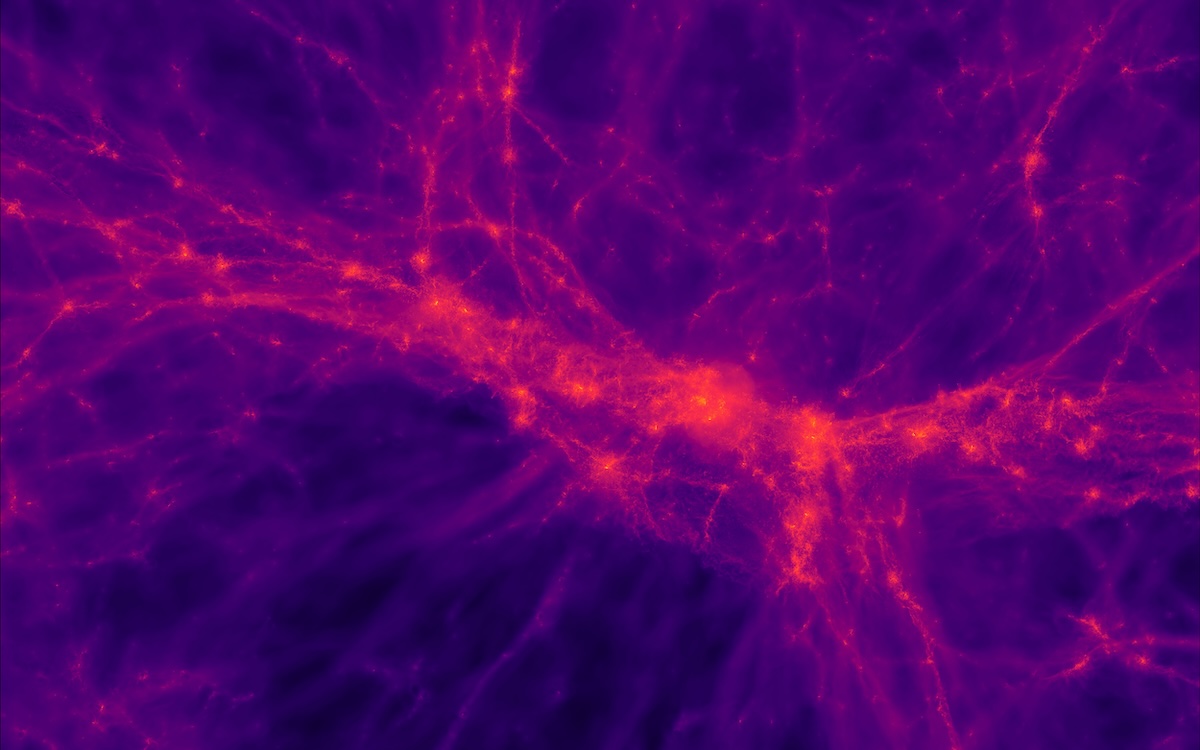
Among his multiple science goals with the GRACE data, Rudnick will investigate the earliest big structures of galaxies in the universe that are called “protoclusters.”
“Today in the present universe, galaxies are spread out into a variety of different kinds of structures,” he said. “There are galaxy clusters, which have hundreds to thousands of galaxies all moving around, held together by their own gravity. There are galaxy groups, which have tens to hundreds of galaxies. Then there are galaxies on filaments, like long threads that connect these systems into a network we call the cosmic web. The clusters and groups are kind of at the nodes, the intersections, of this cosmic web. Finally, there are galaxies out there all by themselves, totally isolated.”
The KU researcher said he hopes to understand how galaxies in these different regions of the universe are affected by the places in which they live.
“We're going to look at the very earliest structures of galaxies that formed after the Big Bang,” Rudnick said. “Protoclusters contain all the galaxies that will end up in a present-day galaxy cluster, but at this distant epoch in the universe, are spread out over very large areas. If I want to look at a galaxy cluster in the nearby universe it is easier, because the galaxies are all pretty close together on the sky. What Roman allows us to do is observe galaxies in exquisite detail but spread all over a large area of the sky.”
Rudnick said he hopes to learn more about how those structures are connected with each other and how filaments tie the densest parts of the universe to one another.
“This is going to be, by far, the biggest systematic survey to assess the cosmic web in the distant universe,” he said.
The result will be a 3D map of the universe that could give new understanding to how cosmic "neighborhoods” shape how galaxies appear.
“In the nearby universe, galaxies in what we’ll call very rural environments look like spiral galaxies,” Rudnick said. “They tend to have lots of gas, form lots of stars, and they tend to be rotating like a Frisbee. If you go to dense regions, clusters and groups of galaxies, you find that the galaxies aren't forming new stars, they don't have as much gas, they haven’t formed stars in a while. They tend to be conglomerations of stars moving in random orbits, like bees in a swarm. We call those elliptical galaxies, because on the sky, they just look like fuzzy elliptical blobs. And they look red because they’re dominated by older stars, which are redder, so they really look very different from those in low-density regions of the universe. What we don’t know is why these galaxies look so different. By looking at the earliest times at which galaxies could have been affected by their surroundings, GRACE will make fundamental advancements in this field.”
While financial details are still being finalized, Rudnick said NASA support will allow for the hiring of a postdoctoral researcher. Additionally, KU undergraduates will work with data from the cutting-edge space telescope for years to come. Rudnick also will try to use these data in a long-running outreach program he runs at Lawrence High School.
“It’s not an understatement to say that this program could define my science direction for the next five years, if not 10,” Rudnick said. “One of the most impactful aspects about GRACE is that we’re bringing this amazing NASA data, taken with NASA’s next flagship observatory, to Kansas. It’s really fantastic that researchers in our state will get first access to this game-changing research.”
Rudnick’s chief collaborators include principal investigator Sangeeta Malhotra and fellow lead investigators James Rhoads and Isak Wold, all with NASA’s Goddard Space Flight Center.
Rudnick expects the first data to arrive from the Nancy Grace Roman a few months after commissioning, with the first data specific to GRACE arriving within the first year of operations.