Restrictions on emigration equally important as immigration in shaping European borders, research finds
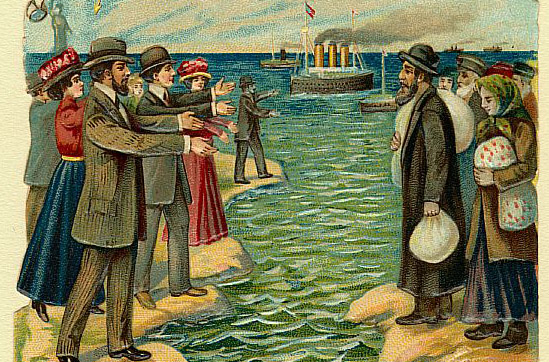
LAWRENCE — People tend to view immigration as either a fundamental threat or a fundamental benefit to a nation. But what about emigration?
“We often connect immigration with citizenship,” said Erik Scott, the John P. Black Professor of History at the University of Kansas. “But citizenship in terms of who belongs and what rights people have is also defined by emigration, the ability to leave.”
His new article, titled “Unauthorized Emigration from East Central Europe Since the 19th Century,” challenges the traditional focus on immigration to look at how restrictions on emigration have helped define the borders of Central and Eastern Europe since the 19th century. The article is published in the “Oxford Research Encyclopedia of Migration Studies” by Oxford University Press.

“Unauthorized emigration is a byproduct of state restrictions on exit, which is something we don’t often think about,” he said. “We tend to think more about states limiting entry. But when states restrict exit, people still find ways of leaving and moving across borders.”
While Scott said he doesn’t like to say the United States is a country of immigrants — because that doesn’t encompass indigenous populations — he does believe it’s been shaped by immigrants.
“And for many of those immigrants, their stories were shaped by the countries they left and their experiences of departure. The rules those countries had for their movement influenced their identities going forward,” he said.
His Oxford article focuses on three main aspects:
- A long-term history of East Central Europe
- How the region is interconnected with U.S. history through migration
- The ways in which longer-term limits on exit have been replaced with restrictions on immigration.
“Historical restrictions on emigration from East Central Europe gave rise to the way we view refugees and political asylum seekers in our global migration system,” he said. “They also helped define the borders of the East Central European region from the 19th century through the Cold War.”
The impetus for this material came from Scott’s ongoing research on defectors, an area where he had gained significant recognition as an expert.
“I thought a lot about the ways in which the Cold War conflict centered on disputes involving the ability of people to move and what that movement meant. You don’t get terms like defector until the Cold War. But there’s a much longer history of this process shaping nations and empires all across Europe, particularly In East Central Europe,” he said.
Although harsh emigration restrictions in the region have fallen away since the Cold War’s end, debates have continued but shifted more toward immigration. Scott said that much of this conversation involves the way these states relate to the management of multiethnic populations.
“When you look at the Austro-Hungarian empire and the Russian Empire as these vast multiethnic states in the 19th century, you’ll see how emigration was restricted, yet it was restricted unevenly. Certain people who were seen as posing a challenge to the state might be encouraged or even pushed to leave. This occurred among Jewish populations from East Central Europe in particular,” he said.
Scott describes the “Oxford Research Encyclopedia of Migration Studies” as an effort to bring together the latest research on a subject he calls “interdisciplinary and incredibly global.” The editor of the series, Maddalena Marinari, who is an endowed professor of history at Gustavus Adolphus College in Minnesota, is a graduate of KU’s doctoral program in history.
“There are contributors working on everything from climate change to U.S. settler colonialism to Japanese picture brides,” he said of the project. “It’s really an exciting collaboration because there’s no one scholar who could be an expert on all of these things.”
A KU professor since 2012, Scott is as an expert in Soviet and global history. He also serves as director of KU’s Center for Russian, East European & Eurasian Studies and is the editor of The Russian Review. His 2023 book “Defectors: How the Illicit Flight of Soviet Citizens Built the Borders of the Cold War World” charts the struggle over defectors that unfolded among rival intelligence agencies operating in the shadows of an occupied Europe.
Scott said, “We all have to grapple with the fact that people will continue to move across borders and with the fact that migration is a globally interconnected and complex process.”