Scholar says censorship was constant struggle during Spanish Inquisition
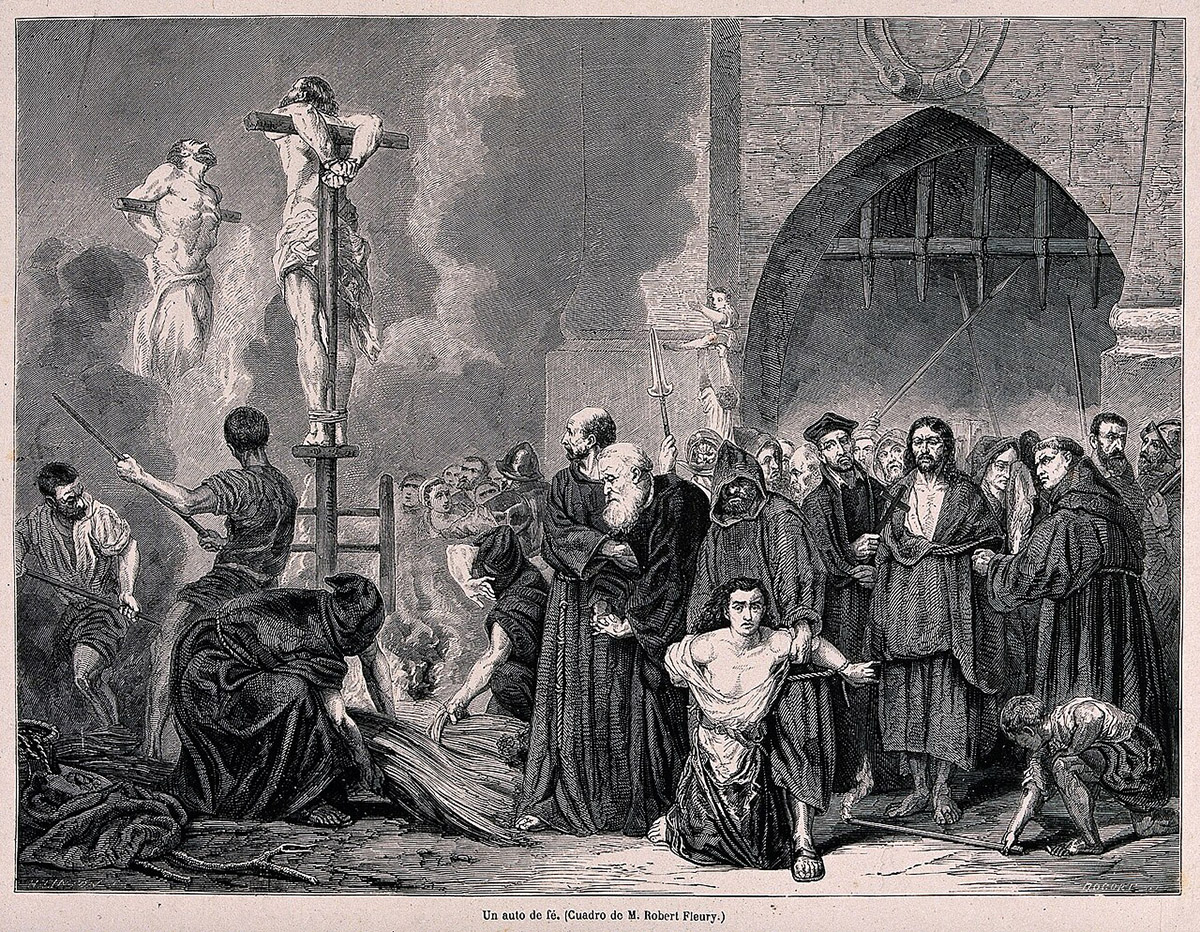
LAWRENCE — Despite the combined power of church and state, strictures on printing presses, inspectors nosing around bookstores and enforcement powers that included sending people to be burnt at the stake by secular authorities, the Spanish Inquisition could not completely or even effectively censor heretical texts.

“The key takeaway is still valid today — that when you prohibit things, it makes them more attractive,” said Patricia Manning, professor in the Department of Spanish & Portuguese at the University of Kansas.
Manning is the author of a chapter on censorship in the new book “The Cambridge Companion to the Spanish Inquisition.” The KU scholar said that, in those days (1478-1834), the texts subject to censorship ranged from church sermons to the songs and poems performed by blind people in the street for alms. Indeed, Inquisitional censorship preceded the widespread adoption of the printing press.
“It started in 1478, when they got the papal bull, and the first prosecutions started in 1480,” Manning said. “Their first mission was really before the Jewish population had been expelled in 1492. And even before that point, the Inquisition is definitely concerned with the behavior of conversos, who are people who had converted from Judaism to Catholicism but were thought to be backsliding. That mission would later expand to people who had converted from Islam as well.”
What began as a hunt for an enemy within, Manning said, expanded into a search for heresy in all fields and spheres.
And while there are gruesome tales of autos-da-fé (acts of faith) with punishments meted out to heretics up to and including burning at the stake, Manning emphasized in her chapter the limits of the Inquisition’s censorship authority: Inspectors lacked copies of the thick, bound indexes listing banned books, and border guards couldn't read French to prevent smuggled copies of Voltaire from infiltrating. Additionally, many exemptions in the form of licenses to read prohibited books were granted, leading to struggles over the control of libraries containing such works.
“The ultimate conclusion is that what you could read depended a lot on your economic and social circumstances,” the author said.
Manning wrote that what began with tremendous fervor waned only after more than a century.
“The Inquisition did burn books, particularly certain kinds of books. Texts in Arabic and Hebrew were frequently burnt ... often in a public event. But as the Inquisition progressed, this was something that was special — reserved for particularly pernicious texts,” she said.
Manning said she accepted “the conventional idea about the Inquisition, that a lot of the bureaucracy seem to function less well after about 1650. So, for example, there is a very long pause in issuing indices of prohibited books. There's one in 1640 and then not another one until 1707. So that is, I think, a fairly significant sign that things are not running very smoothly. I suspect that part of the reason there was such a long pause was because there was a lot of disagreement among the people who were compiling these indices about what they should and should not prohibit.”
In the end, Manning said, the Inquisition’s attempts at censorship proved the futility of the endeavor.
“It's very hard to control the written word,” she said. “The Inquisition found it so. And I think even today we can talk about that same difficulty. Obviously, with digital texts, that becomes even harder. It's challenging and, ultimately, doesn't prove to be entirely effective.”