Spencer Museum’s spring exhibitions explore richness of Japanese and Asian American art
LAWRENCE — The Spencer Museum of Art will open two special exhibitions on Feb. 19 — “Street Nihonga: The Art of Jimmy Tsutomu Mirikitani” and “Brush, Block, and Blood: Three Generations of Yoshida Women Printmakers” — which together with other spring exhibitions illuminate the richness and diversity of Japanese and Asian American art.
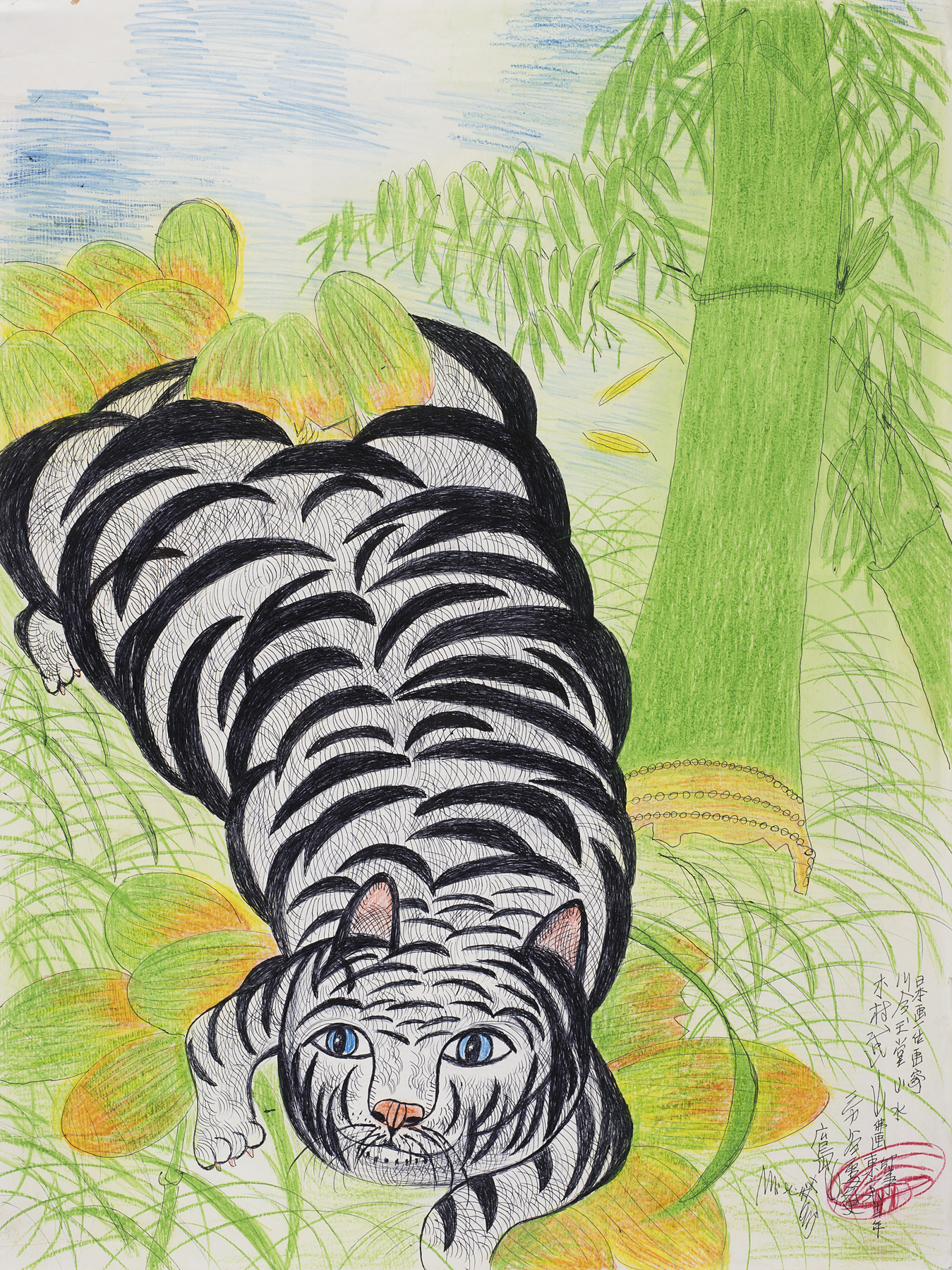
paper, newsprint, collection of Linda Hattendorf, Taos, New Mexico
“Street Nihonga” is the largest assembly of works to date by Japanese American artist Jimmy Tsutomu Mirikitani (1920–2012), who was born in Sacramento, California, in 1920 and raised in Hiroshima, Japan.
Mirikitani’s life was shaped by displacement, resilience, collaboration and creativity across borders. Trained in Nihonga (“Japanese-style” painting) in prewar Japan, he returned to the United States in 1940 and endured incarceration at Tule Lake during World War II, the loss of family and friends in Hiroshima to the atomic bombing, and decades of homelessness in New York City. Spanning painting, drawing, collage and mixed media, his art became both a survival strategy and a way to record and share memories from his extraordinary life.
The exhibition features 145 works by Mirikitani alongside photographs, documentary videos and related works from the Spencer Museum’s collection. “Street Nihonga” is co-curated by Maki Kaneko, KU associate professor of Japanese art, and Kris Ercums, Spencer Museum Curator of Global Contemporary & Asian Art.
“We coined the term ‘street Nihonga’ to capture Mirikitani’s remarkable ability to transform traditional Japanese painting techniques using materials found on New York’s streets and to amplify both the vision and inventiveness he brought to his work,” Kaneko said. “When I began researching his life in 2015, I did not know where the process would take me, but a decade later I am grateful to have collaborated with the Spencer Museum to bring this project, and Mirikitani’s art, to a wider audience.”
The in-gallery exhibition is accompanied by a robust virtual exhibition that shares additional research and resources, presented in both English and Japanese. An exhibition catalog edited by Kaneko and Ercums features 163 color illustrations alongside scholarly essays and reflections and is available for sale at the Spencer Museum.
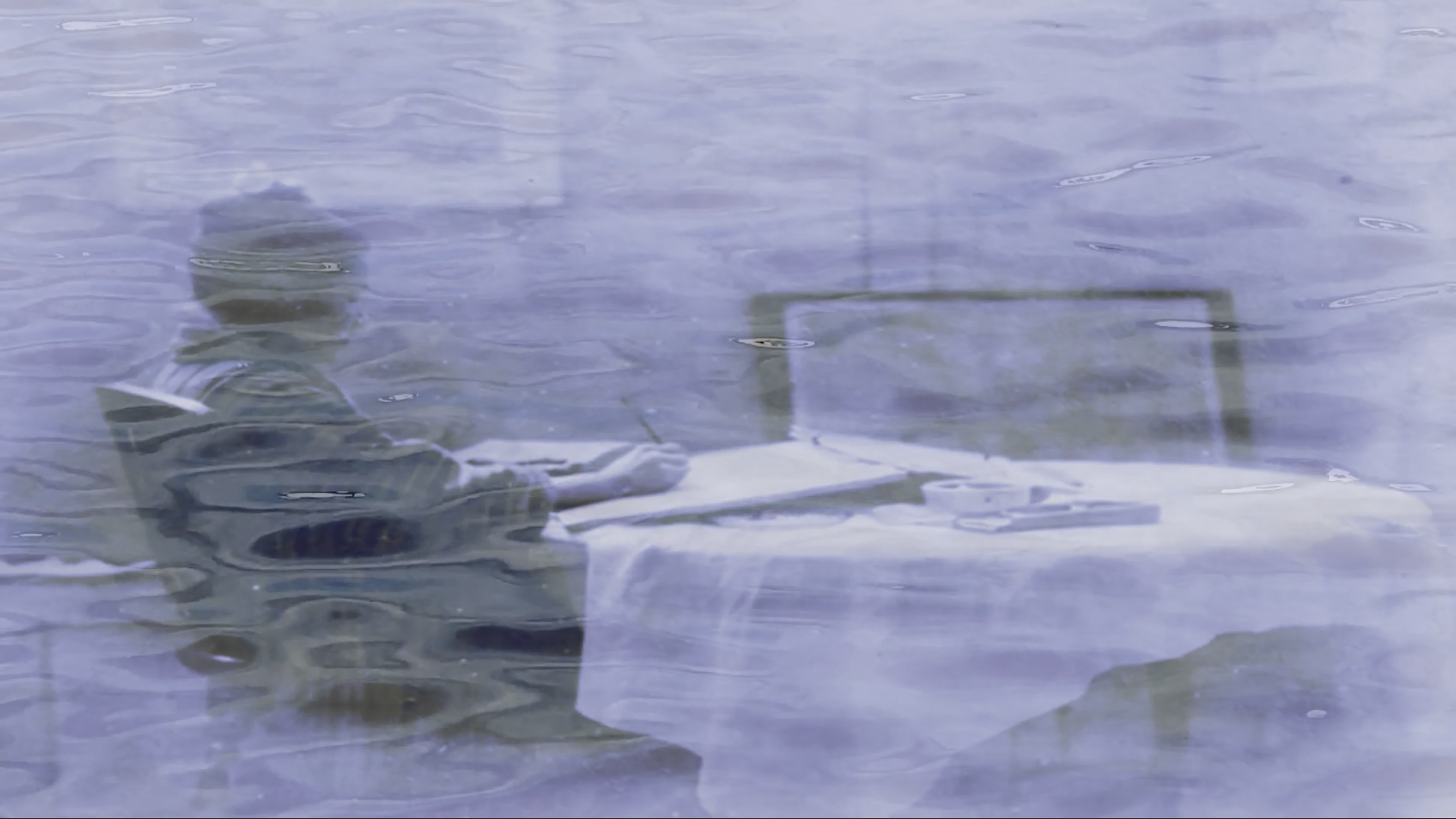
On view alongside “Street Nihonga” is a video installation by Japanese artist Ayomi Yoshida titled “The River of Time.” In the video images of Ayomi Yoshida, her grandmother Fujio Yoshida and her mother, Chizuko Yoshida, are overlaid on a background of rippling water. The Spencer Museum commissioned Ayomi Yoshida to create this new work in response to the spring exhibitions as an international artist-in-residence.
Ayomi Yoshida’s work is also presented alongside Fujio and Chizuko’s in the special exhibition “Brush, Block, and Blood: Three Generations of Yoshida Women Printmakers.” Together their prints trace more than a century of artistic innovation, intergenerational dialogue and the enduring power of women’s creativity. This is the first time that work by all three women has been displayed together in the United States.
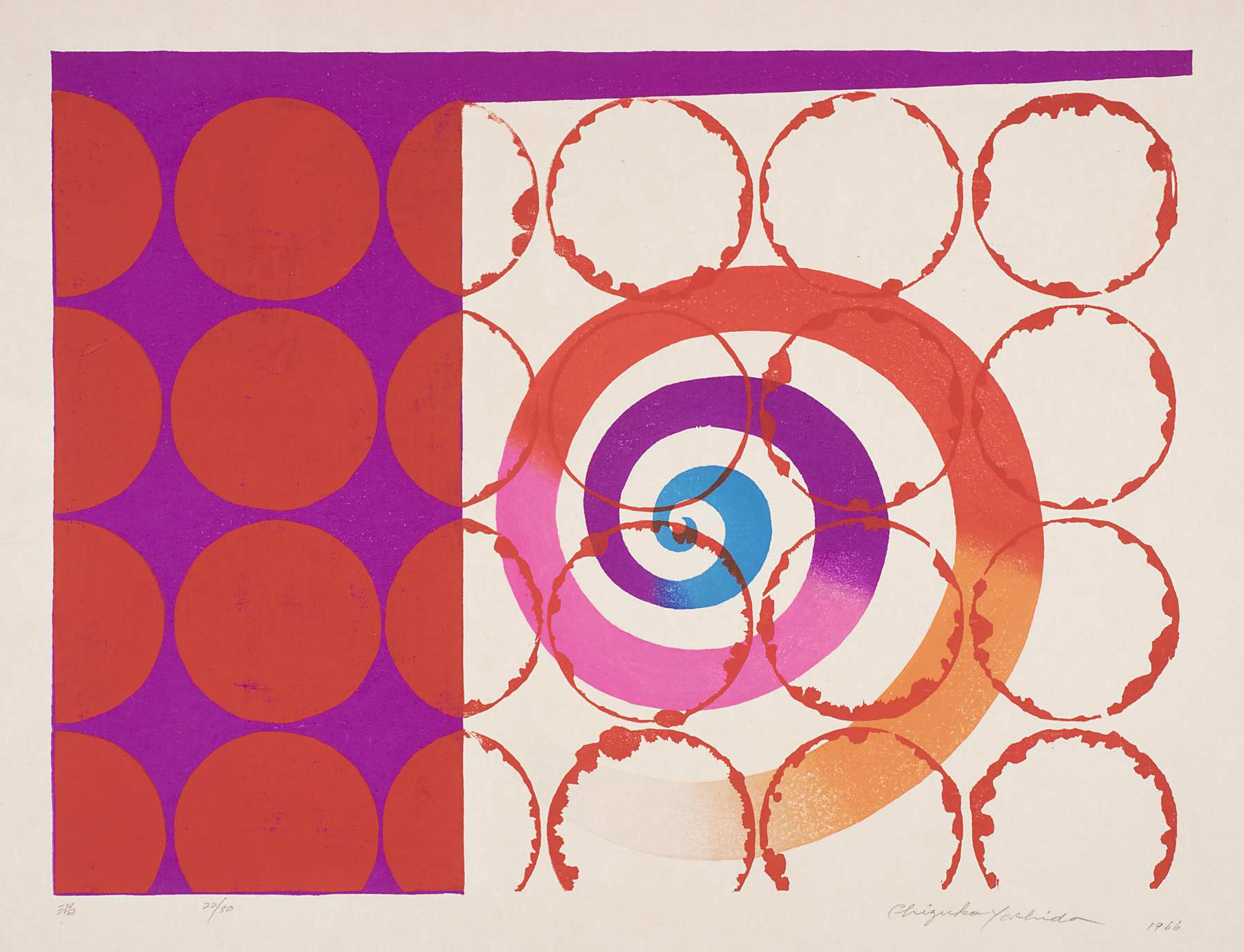
“The exhibition is a celebration of their artistic achievements and the ways that their work both individually and collectively transformed the legacy of one of Japan’s most distinguished artistic lineages,” Ercums said. “Their work also helped reshape modern and contemporary Japanese printmaking.”
In addition to “Street Nihonga” and “Brush, Block, and Blood,” two smaller exhibitions also share Japanese and Asian American contemporary art. “Studio Nihonga” draws from the Spencer Museum’s collection to highlight traditional Japanese painting methods in contrast to the improvisational and resourceful practices seen in Mirikitani’s art.
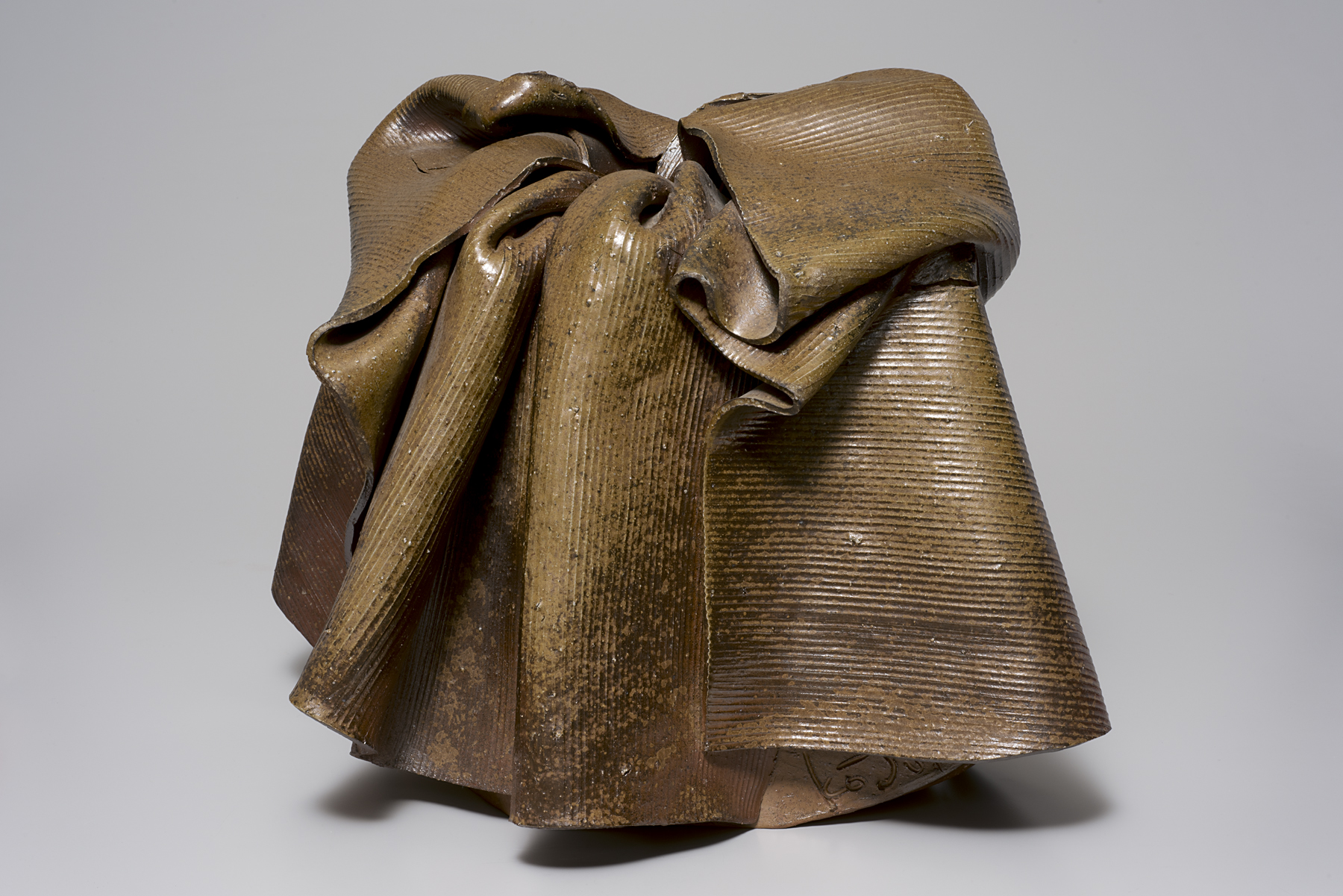
Also drawing from the Spencer’s collection is “Form & Flux: Contemporary East Asian Ceramics.” This exhibition explores how artists blend centuries-old traditions with changes in form, technique and approach to reimagine ceramics with bold colors, experimental glazing and abstract forms that challenge conventional notions of pottery.
“All of these exhibitions demonstrate how contemporary Japanese and Asian American artists sustain cultural practices while pushing beyond conventional boundaries,” Ercums said. “Visitors to the Spencer Museum this spring will be inspired by an impressive range of deeply powerful, personal and beautiful works of art.”
“Street Nihonga,” “Brush, Block, and Blood” and “Studio Nihonga” will remain on view through June 28. “Form & Flux” will remain on view into August 2026. A full program of related events can be found on the Spencer Museum’s website. Admission to the Spencer Museum and to all these exhibitions is free for everyone.
These exhibitions and related programs are supported by the Henry Luce Foundation, the Terra Foundation for American Art, the E. Rhodes and Leona B. Carpenter Foundation, the National Endowment for the Arts, the Helen Frankenthaler Foundation, the Linda Inman Bailey Exhibition and Programming Fund, the Douglas County Community Foundation, the KU Office of Research, KU Student Senate, the Kress Foundation Department of Art History, George and Hillary Hirose, Margaret Silva, Judy Paley, the International Artist in Residence Program Fund, the Marilyn J. Stokstad Spencer Museum Publications Fund, Arts Research Integration and Friends of the Art Museum.
The Terra Foundation for American Art, established in 1978 and having offices in Chicago and Paris, supports organizations and individuals locally and globally with the aim of fostering intercultural dialogues and encouraging transformative practices that expand narratives of American art, through the foundation's grant program, collection and initiatives.