Startup from School of Pharmacy seeks to redefine oral testosterone replacement therapy
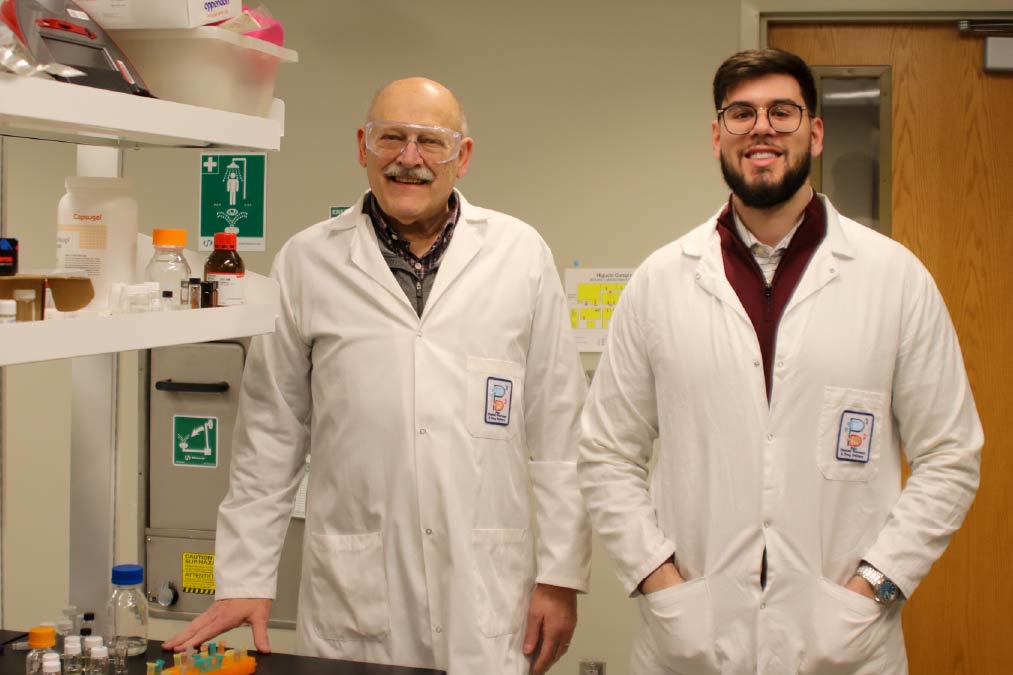
LAWRENCE — Before SteroCore was a company, it was a question.
“There’s really no good option for delivering (oral) testosterone,” said Yezan Salamoun, a 2023 graduate of the University of Kansas School of Pharmacy and co-founder of SteroCore. “Based on my patient experiences, as well as learning about drug development in the curriculum itself, I realized there’s really no good option.”
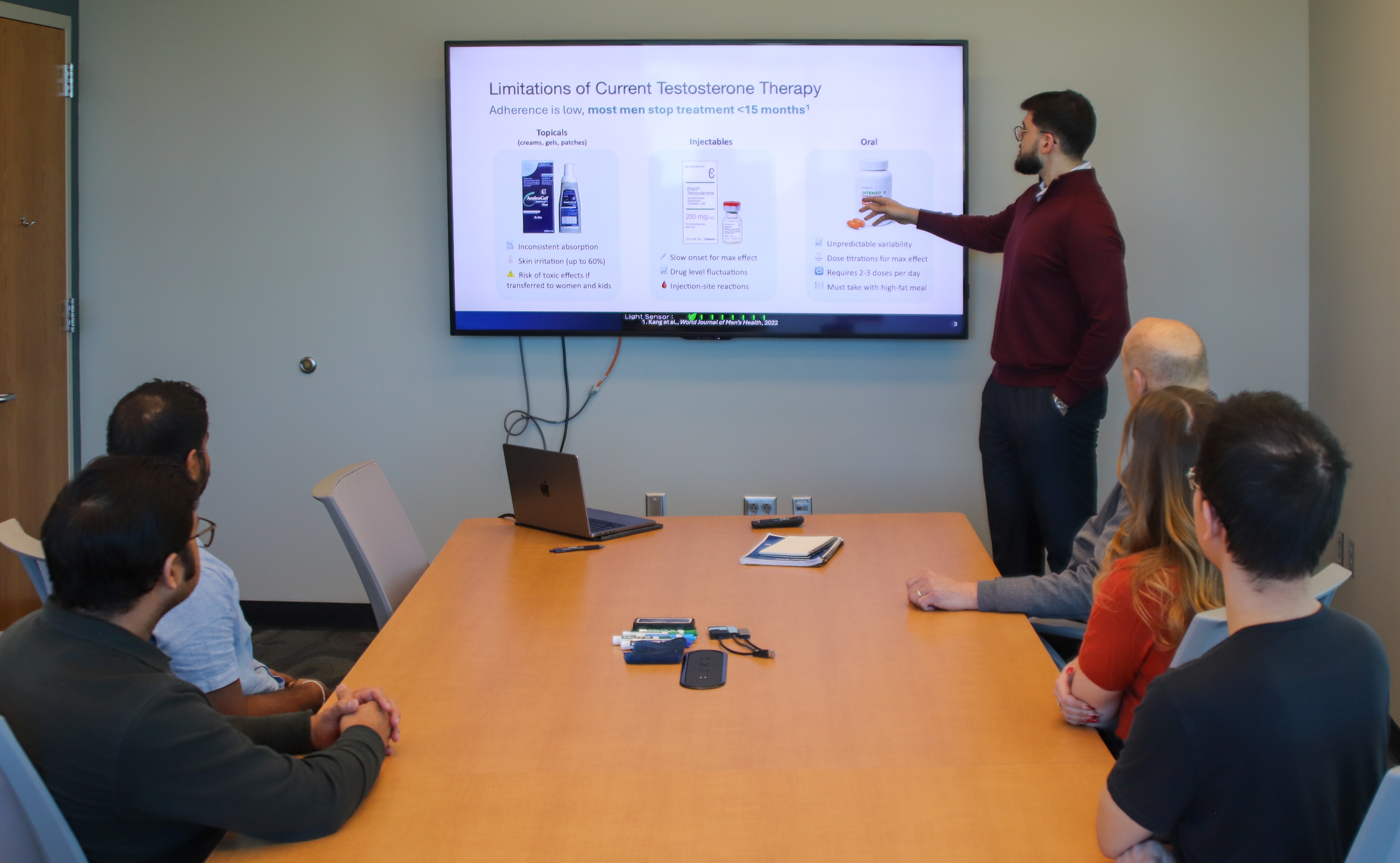
Patients must inject themselves or use messy topical creams, according to Salamoun, who further explained that the creams especially can cause unintentional side effects by getting passed on to infants or women of childbearing age.
These are not “the best option for patients in terms of adherence and acceptable side effects,” he said.
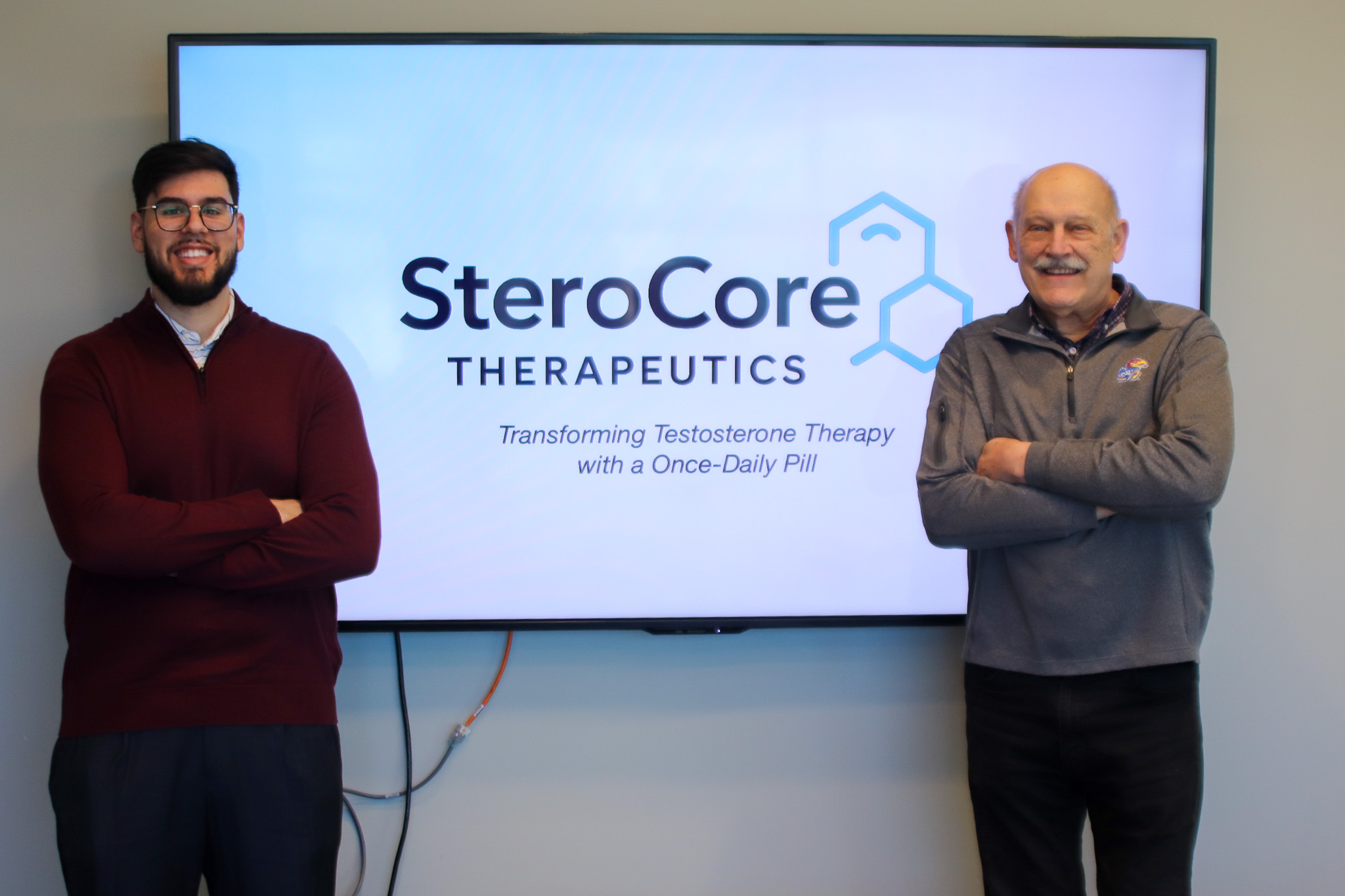
Clinical frustration, rooted in patient experience, became the spark behind SteroCore, a KU School of Pharmacy startup developing a novel oral testosterone therapy using a prodrug strategy designed to work with the body’s physiology rather than against it.
Turning the idea into viable science required partnership. Salamoun collaborated with Michael Hagemen, Valentino J. Stella Distinguished Professor of Pharmaceutical Chemistry and director of the Biopharmaceutical Innovation and Optimization Center in the Department of Pharmaceutical Chemistry. Hageman’s research on prodrugs and 30-plus years of industry experience provided the expertise and mentorship to get SteroCore off the ground.
The science of SteroCore is early-stage, and the ambition is clear: reimagine oral testosterone replacement therapy (TRT) to improve consistency, adherence and quality of life.
A clinical problem hidden in plain sight
Testosterone replacement therapy is widely prescribed, yet far from ideal. Injections require regular clinic visits or self-administration. Topical creams can transfer unintentionally to partners and children. Existing oral options have struggled with both patient adherence and physician uptake.
According to Salamoun, 76% of patients on TRT report being unhappy with their treatment. This percentage correlates with high discontinuation rates; many patients stop therapy within months, he said.
“We’re talking about roughly 4 to 5 million men in the U.S. who have low testosterone,” Salamoun said. “Only about 1 million are actually receiving treatment. And among those who are treated, many stop therapy within months.”
The challenge lies in human physiology.
“The underlying problem is that testosterone is metabolized by the liver,” Salamoun said. “Only about 1% of it actually makes it to the bloodstream.”
When any oral medication is swallowed, it passes through the digestive tract and into the liver before circulating through the body. This process, known as first-pass metabolism, significantly reduces the amount of active testosterone that survives.
Previous strategies for oral TRT have tried to bypass the system through formulations and chemistry that try to go around the liver. To some extent these strategies do work; however, they cause large variability between patients, making prescribing them far from ideal, Salamoun said.
Hageman said that patients might see fivefold differences or more across different days. This creates ambiguity clinically, and because of the significant variability, the dosage is often kept lower than clinical significance to avoid toxicity. With widely fluctuated exposure, physicians must start with low levels, monitoring labs closely and frequently.
Some oral products also require multiple daily doses and fatty meals to optimize absorption. Because of those limitations, Salamoun said, physicians have not widely adopted them.
“When you ask physicians to do all that work to find the right dose for a patient, they’re just going to prescribe something that’s easier.”
A different approach: Using the liver instead of avoiding it
Rather than trying to get around the liver, SteroCore founders took a different approach: They created a prodrug that works with the liver’s natural physiology.
A prodrug is an inactive compound that becomes active after it metabolizes. The drug delivers something that is inactive, and the body activates it so that patients receive the therapeutic effect. This strategy leverages liver physiology rather than avoiding it.
Hageman said that the human body naturally removes testosterone quickly, a signal of how strong the hormone is. The goal of testosterone is that it is secreted, does its job and is cleared by the body as quickly as it can.
Designing a compound that accounts for that biological reality is the innovation behind STC-101.
De-risking the science
Commercial drug development requires slow-moving discipline.
“When you start with a preclinical study that you eventually want to get to be a commercial product, you’ve got to do it in steps,” Salamoun said. The first step in these trials is molecular docking simulations.
Computational modeling for STC-101 demonstrates whether the compound can bind to the proteins and enzymes in liver. If it does, researchers can validate that it is possible. From there they move to bench studies using liver cells.
The team saw that the prodrug was being converted to testosterone on the bench; following this confirmation, researchers began rodent studies, which also demonstrated activation. Team members expressed their excitement that their compound is promising and is being de-risked one model at a time.
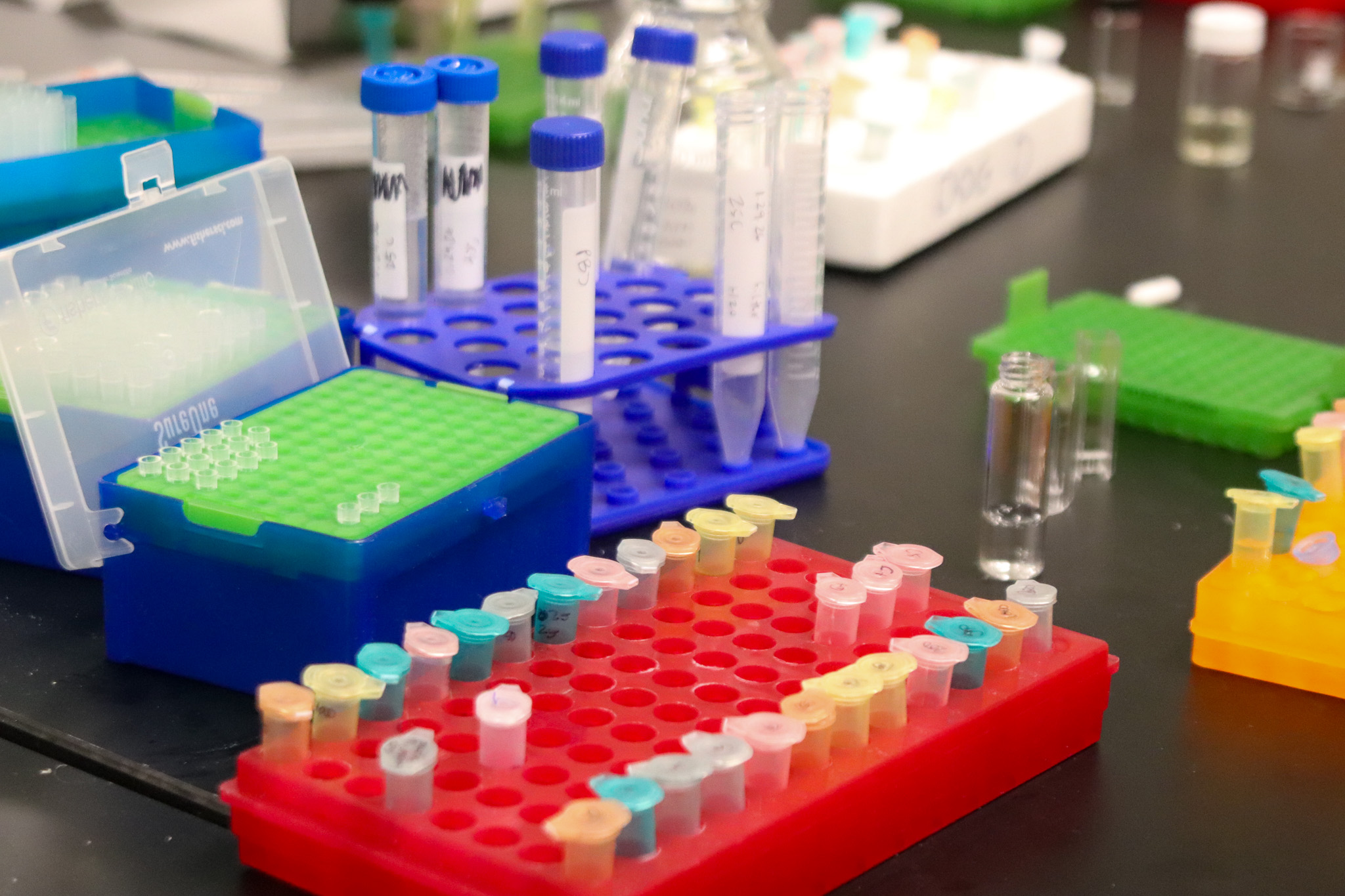
Hagemen emphasized the importance of modeling throughout the process of drug development. Researchers start with in vitro experiments (studies conducted outside of living organisms in controlled environments), then in vivo animal experiments (studies conducted within, on, or using a whole living organism). The in vivo experiments allow scientists to predict what is going to happen in a clinical setting; it’s how to convince potential investors that the drug being developed is worthwhile to invest in.
Next steps
The team has conducted testing up through in vivo rodent testing; its next steps is to scale up and perform studies with larger in vivo models. While the timeline remains long, and the team said that it could take 10-15 more years before the prodrug could ever see the market, the progress and results shown in initial testing are promising.
KU made, pharmacy driven
SteroCore was built within KU’s Department of Pharmacological Chemistry, a department with a strong history of drug development. The department was started by Takeru Higuchi in the 1960s and has only grown in reputation. Scientists like Valentino Stella have had multiple products reach the market.
Earlier this month, SteroCore received early support through funding and resources provided by KU Innovation Park, which helped the founders access mentorship, facilities and seed-stage support to advance their prodrug research. This backing enabled the team to build critical preclinical momentum and connect with the broader Kansas bioscience ecosystem as it works toward larger-scale development.
Hageman pointed to KU’s evolving research infrastructure as the catalyst for their success.
“Five to eight years ago, we wouldn’t be doing what we’re doing,” he said. “There were no systems in place like Rock Chalk (Ready), ACCEL-KS or the Innovation Park to help move things forward. The overall climate at the university is changing to foster this kind of work.”
The ecosystem of support extends beyond the Lawrence campus, connecting to Kansas-based contract research organizations and strengthening the state’s bioscience network.
The snowball effect created by KU
What began as a pharmacy student identifying a clinical gap has evolved into a university-backed startup tackling a long-standing pharmaceutical problem. Every study builds momentum, from the initial research question to design to clinical expression.
For KU, and the state of Kansas, SteroCore represents something larger than potential therapeutic success. The growing culture of translational science, entrepreneurial thinking and innovation is emerging from the heart of the KU School of Pharmacy.